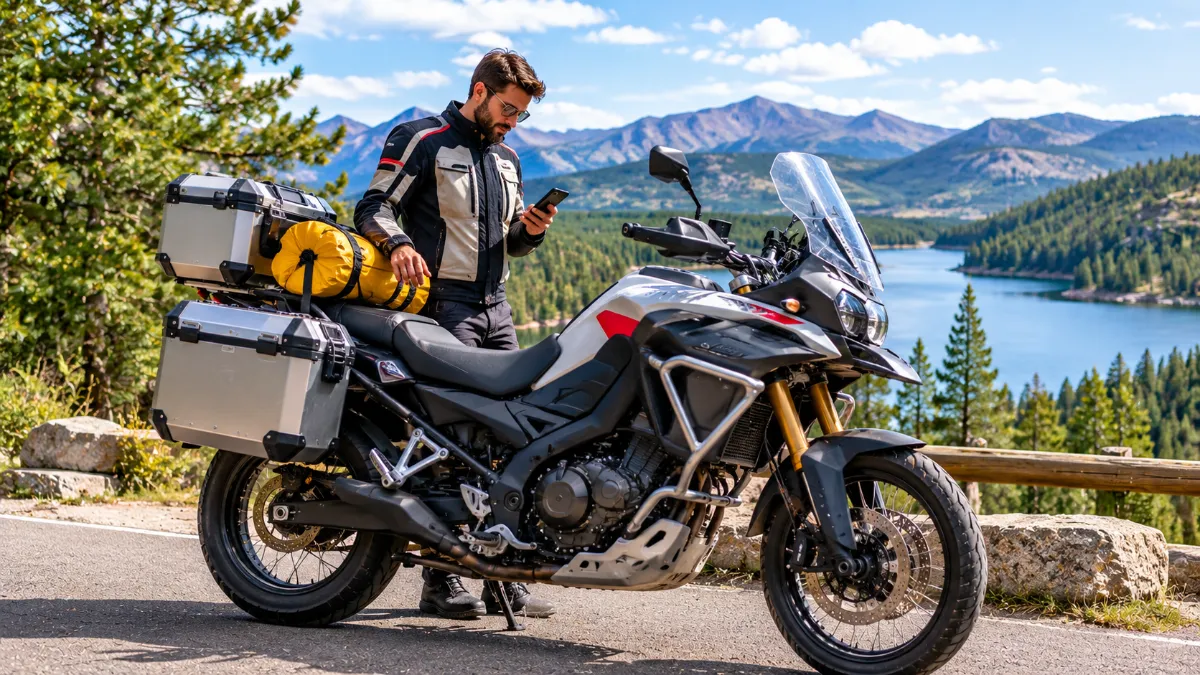
 Seat, wind protection, range and luggage that make a bike good for long-distance riding
Any motorcycle can go a long way if you are patient. A motorcycle that is truly good for long-distance riding is one you can still enjoy at hour six: it keeps wind off your chest, holds you in a comfortable position, carries what you need and goes far enough between fuel stops that the trip does not turn into a series of detours. The right answer depends on you, your route and your budget, and it is not always the biggest or most expensive bike.
What Makes a Good Beginner Motorcycle? 7 Things to Consider
Motorcycles for Every Kind of Rider: How to Choose a Motorcycle That Actually Fits
This guide breaks down the features that matter, compares four real touring and adventure-touring models using spec listings, and covers the rider side of fatigue, because the best bike will not help if you are exhausted. It draws on a bike-comparison round-up, a government fatigue guide, spec listings, a 2026 head-to-head review and maintenance schedules. Where sources are dated, conflict or are missing, the article says so.
What Makes a Motorcycle Good for Long-Distance Riding? The Core Features
BikeBound’s long-distance buying guide (published December 2025) lists the qualities it looks for. They are a good checklist:
- Comfort: ergonomics that suit hours in the saddle, including seat and handlebar reach.
- Wind protection: a fairing, windscreen or full touring setup to reduce fatigue at highway speed.
- Range: a large tank or an efficient engine for long gaps between fuel stops.
- Chassis and suspension: stability at speed and with a passenger or luggage.
- Luggage: integrated cases or mounting points for racks and bags.
- Engine: smooth, torquey and reliable, which also reduces fatigue.
- Versatility: the ability to handle pavement, twisty roads, gravel and light dirt, if your route needs it.
The sections below take these one at a time. BikeBound’s list does not mention cruise control, so I cover that separately.
Why Fatigue Is the Real Enemy
Government safety guidance explains why these features matter. A Transport for NSW (Australia) page on rider fatigue says riding is more physically and mentally demanding than driving, and that heat, cold, noise, strong wind buffeting and dehydration add to fatigue. It says the main danger is a lapse in concentration, and that the more tired you get, “the harder it is to assess your level of tiredness.” This is an Australian page, but the physical points apply anywhere.
The warning signs it lists include frequent yawning, difficulty focusing, sore eyes, delayed reactions, drifting toward the outer edge in corners, clumsy gear changes, missing road signs and stiffness in the neck, knees or wrists. If you notice them, it says to pull over safely as soon as you can.
A bike that cuts wind noise and buffeting, supports a relaxed riding position and does not force you to stop every hour for fuel directly attacks several of those fatigue sources.
Ergonomics and Seat Comfort
A touring bike should let you sit up, keep your arms relaxed and shift your position. The sources reviewed give limited measurable data, but a few comparisons help:
- Seat height varies a lot. The 2026 Honda Gold Wing Tour DCT is listed at 29.3 inches, the BMW R 1300 GS at 33.4 inches and the Honda Africa Twin DCT at 34.3 inches (Motorcycle.com listings). A dealer listing for the Africa Twin Adventure Sports ES DCT shows 33.7 inches.
- Seat padding differs. In a 2026 comparison of the BMW R 1300 GS and Honda Africa Twin by the reviewers at 1000PS, the BMW’s padded seat suited long highway rides better, while the Honda’s seat was firmer, though its low seat height and a slide-back option helped on varied rides. That was one reviewer’s experience on one test.
- Fit matters more than the number. A bike that fits you at the dealership can feel different after three hours, so a long test ride is the best check.
Seat comfort is personal, and the sources reviewed do not give measurements for seat width or foam density.
Wind Protection
Wind is a constant load at highway speeds. NSW lists wind buffeting among the contributors to fatigue, and a webBikeWorld article on beating rider fatigue (2014, by Mark Hinchliffe) says a windscreen reduces wind noise, which fatigues riders, and recommends earplugs and a full-face helmet. An adjustable windscreen helps because different riders and conditions need different heights, though the sources reviewed do not test screens.
A 2017 RideApart review of an earlier-generation Honda Africa Twin DCT called wind protection decent, reported no buffeting for passengers and noted the rider felt cold on the shoulders and lower legs, with heated grips not standard. That is a different generation, so check the current bike’s equipment list.
The sources reviewed here do not measure or compare wind protection across these bikes, so sit behind the screen at highway speed before you buy.
Fuel Range
BikeBound lists range as a core quality, and tank size is the starting point. Listed fuel capacities for the models in this article:
| Model | Fuel capacity |
|---|---|
| Honda Gold Wing Tour DCT | 5.5 gal |
| BMW R 1300 GS | 5 gal (including a 1 gal reserve) |
| Honda Africa Twin DCT | 5 gal (including a 1 gal reserve) |
| Honda Africa Twin Adventure Sports ES DCT | 6.6 gal |
Range is tank size multiplied by fuel economy, and the sources I reviewed do not give fuel-economy figures for these bikes, so I cannot state their ranges. For an illustration only, a bike that gets 40 mpg would go about 200 miles on 5 gallons and about 264 miles on 6.6 gallons, though real mileage varies with speed, load and wind. Look up the real-world mpg for the bike you are considering, and remember that the last gallon or so is the reserve.
Also note your route: in remote areas, plan fuel stops around the shortest realistic range, not the optimistic one.
Engine, Power and Weight
The ideal touring engine is smooth and torquey rather than just powerful. Power and weight figures from the listings show different philosophies:
| Model | Power | Wet weight |
|---|---|---|
| Honda Gold Wing Tour DCT | 125 hp (1,833cc flat-six) | 847 lb |
| BMW R 1300 GS | 145 hp | 523 lb (see note) |
| Honda Africa Twin DCT | 102 hp (per 1000PS) | 535 lb |
The Gold Wing is listed about 312 to 324 pounds heavier than the other two, a number that matters at low speeds and when parking, though its listed 29.3-inch seat height helps. The 2026 comparison reported the BMW’s 145 horsepower gave it a clear advantage on fast roads and stability above about 120 km/h (75 mph), while the Honda’s lower power was rarely a deciding factor on twisty roads. Extra power helps with passing and carrying a load, but weight and smoothness matter as much on a long trip.
A note on the BMW’s weight: RideApart reports BMW’s 523-pound figure as a claimed dry weight, while Motorcycle.com lists 523 as wet. Check the basis before comparing.
Cruise Control, Heated Grips and Other Comfort Equipment
The Gold Wing’s listing shows cruise control as standard, along with a linked-brake ABS system. The Motorcycle.com pages for the BMW and Africa Twin do not list cruise control either way, so I cannot say what they include, and equipment varies by trim and option package. Check for:
- Cruise control, which lets you relax your throttle hand on long highway stretches. The 2014 webBikeWorld article notes that winding back roads negate its use, and suggests that varying your speed and choosing engaging roads helps you stay alert, so cruise control is a tool, not a cure for fatigue.
- Heated grips and a heated seat, which the sources reviewed do not cover in detail, but which matter in cold weather.
- A usable dashboard and phone connection. In the 2026 comparison, the BMW’s controls were described as more intuitive, with a rotary wheel, and the Honda had many buttons and needed a cable for Apple CarPlay. Those are one reviewer’s findings on test bikes.
- Adjustable suspension and ride height, which can help when loaded.
Luggage and Load Capacity
BikeBound’s checklist asks for integrated cases or mounting points for luggage, and for suspension and a chassis that stay stable with a passenger or load. The sources reviewed do not give payload or luggage capacities for the models here, so check the manufacturer’s maximum load and the capacity of any cases. Luggage also affects handling and fuel economy, so pack heavy items low and centered.
Final Drive and Maintenance on the Road
How the bike is maintained matters on long trips, and the maintenance schedules I reviewed show a difference in final drive. The BMW R 1300 GS Adventure schedule lists rear bevel-gear (shaft-drive) oil changes at 12,000 and 24,000 miles, with an oil change every 6,000 miles or 12 months and a valve check every 12,000 miles. The Honda Africa Twin schedule lists a drive chain that should be inspected and lubricated every 600 miles, or more often off-road, with an oil change every 8,000 miles or a year and a valve check at 16,000 miles. Both schedules come from maintenanceschedule.com, the BMW’s is for the Adventure model rather than the base GS, and the Honda’s is based on the 2020 manual.
What Does a Car Warranty Cover, and What Does It Exclude?
In practical terms, a chain needs attention during a long trip, and shaft-drive bikes have less routine work between services. That is my reading of the schedules, not a tested comparison of reliability.
BMW’s 2025 US warranty document lists 36 months or 36,000 miles and roadside assistance for 3 years with unlimited miles. I could not retrieve Honda’s current warranty terms. Before a long trip, check what roadside assistance your bike and your own policy offer.
Types of Bikes for Long Distances
BikeBound’s December 2025 list shows the range of options, without specs:
- Full touring and cruiser-tourers: Honda Gold Wing Tour, Harley-Davidson Electra Glide, BMW R 18 Transcontinental.
- Adventure-tourers: BMW R 1300 GS and GS Adventure, Honda Africa Twin and Adventure Sports, Ducati Multistrada V4, Triumph Tiger 900, Yamaha Ténéré 700, Suzuki V-Strom 800DE.
- Sport-tourers: Kawasaki Versys 1000.
- Used bikes: earlier BMW R 1200 and 1250 GS models, Honda ST1300 and ST1100, Suzuki DL1000 V-Strom, Kawasaki KLR 650 (pre-2022), Kawasaki Concours 14 and older Gold Wing GL1800.
The list is BikeBound’s opinion, and I did not verify prices or reliability for each model. Used bikes can cut the price, but have a mechanic inspect any you consider and check service records.
A Four-Bike Snapshot
| Honda Gold Wing Tour DCT | BMW R 1300 GS | Honda Africa Twin DCT | Honda Africa Twin Adventure Sports ES DCT | |
|---|---|---|---|---|
| MSRP | $30,500 (plus $775 destination) | $20,395 | $15,599 (plus $775 destination) | $18,599 (dealer listing) |
| Seat height | 29.3 in | 33.4 in | 34.3 in | 33.7 in |
| Fuel capacity | 5.5 gal | 5 gal | 5 gal | 6.6 gal |
| Cruise control | Standard | Not listed | Not listed | Not listed |
Prices exclude dealer fees and options. The BMW and Africa Twin figures are the same ones used in our comparison of the BMW GS and the Honda Africa Twin, and the Adventure Sports ES figures come from one dealer listing that does not give weight or power.
How to Reduce Fatigue Regardless of Bike
The bike is half the equation. The sources agree on basics:
- Start rested. NSW advises a good night’s sleep before a ride.
- Take regular breaks. NSW says to take breaks even if you do not feel tired, and webBikeWorld recommends short stops at least every two hours, with longer stops in the mid-afternoon when fatigue tends to peak. Treat those as guidelines, not rules, since the NSW page gives no fixed interval.
- Stay hydrated. Both sources advise water and limiting sugary drinks and caffeine, with NSW also cutting back on soft drinks and avoiding alcohol.
- Eat light. NSW suggests snacks such as fruit, nuts or muesli bars, and webBikeWorld advises smaller, more frequent meals.
- Move at stops. Walk or stretch rather than sitting.
- Protect your ears. Earplugs and a full-face helmet reduce wind noise.
- Do not overdress for the cold, NSW advises.
Checklist Before You Buy
- Take a long test ride, at least an hour on a highway if the dealer allows it, and notice your neck, back, wrists and knees.
- Check the seat height and weight against your ability to handle the bike at stops.
- Test the windscreen at highway speed, adjusting if possible.
- Look up fuel economy and tank size to work out your realistic range.
- Review the equipment list for cruise control, heated grips, luggage and a connectivity system you will use.
- Check the load rating for you, a passenger and luggage.
- Read the service schedule and warranty, and plan for roadside help.
- Budget for gear, a good helmet, earplugs, rain gear and luggage.
Frequently Asked Questions
What is the most important feature for long-distance riding?
Comfort and wind protection top most lists. BikeBound lists comfort, wind protection, range, stability under load, luggage and a smooth engine as core qualities, and the NSW fatigue page points to wind buffeting and noise as fatigue contributors.
Do I need a big touring bike for long distances?
Not necessarily. Adventure-tourers like the BMW R 1300 GS and Honda Africa Twin are popular choices, and BikeBound lists sport-tourers and used bikes too. The best choice depends on your route, budget and how much weight you want to handle.
How big should the fuel tank be?
There is no single number. Listed capacities here run from 5 to 6.6 gallons. Multiply tank size by realistic fuel economy to estimate your range, and allow for reserve.
Is cruise control worth having?
Many riders like it on long highway stretches. The Gold Wing lists it as standard. A webBikeWorld article notes it is less useful on winding roads and that varied riding keeps you alert.
Is shaft drive better than a chain for touring?
Maintenance schedules show shaft-drive oil changes at 12,000 and 24,000 miles on the BMW, versus chain lubrication every 600 miles on the Honda. That means less routine work with shaft drive, but I did not find a reliability comparison.
How often should I stop on a long ride?
NSW advises regular breaks even when not tired, and a 2014 webBikeWorld article recommends at least every two hours. Stop sooner if you notice warning signs such as yawning, drifting in corners or clumsy shifts.
Is a heavier bike harder to ride?
Weight matters at low speeds and when parking. The Gold Wing Tour DCT is listed at 847 pounds wet, against about 523 to 535 for the BMW and Africa Twin. Check that you can handle it.
Can I use a used motorcycle for long-distance touring?
Yes. BikeBound lists several used options, such as earlier BMW GS models, Honda ST1300 and Kawasaki Concours 14. Get an inspection and check service history first.
What should I carry on a long ride?
The sources reviewed do not give a packing list. Consider water, snacks, rain gear, earplugs and a way to call for roadside help.
The Bottom Line
A motorcycle good for long-distance riding keeps you comfortable and protected from wind, carries what you need, goes far enough between fuel stops and runs smoothly for hours. Compare the specifics, such as seat height, tank size, weight, power and equipment, but let a long test ride decide. Then do your part: start rested, stay hydrated and take regular breaks.
BMW GS vs. Honda Africa Twin: Which Adventure Bike Should You Choose?
🔹🔹 Follow us on Facebook 🔹🔹