 Discover the essential features that explain what makes a good beginner motorcycle, from manageable power and comfortable handling to safety and affordability.
Buying your first motorcycle is an exciting step, but choosing the right one takes more thought than simply picking a bike that looks good. The American market offers everything from lightweight commuter motorcycles to sporty street bikes, cruisers, and adventure models. Each has its own advantages, and not every motorcycle is suitable for someone who is still learning.
For a beginner, the first few months of riding are about developing confidence, understanding how a motorcycle responds, and learning to handle everyday situations. A bike that feels intimidating at low speeds or delivers more power than you can comfortably manage can make that process unnecessarily difficult.
So, what makes a good beginner motorcycle?
The best first motorcycle combines manageable performance, predictable handling, a comfortable riding position, and reasonable ownership costs. It should suit your height, experience, and intended use without forcing you to compromise on essential safety features.
How to Detail Your Car at Home Like a Professional
Here are seven things to consider before buying your first motorcycle in the United States.
1. Engine Size and Power That Match Your Experience
Engine displacement is often the first specification new buyers notice. Motorcycle advertisements frequently highlight cubic centimeters (cc), horsepower, and acceleration, but these numbers do not automatically tell you whether a bike is suitable for a beginner.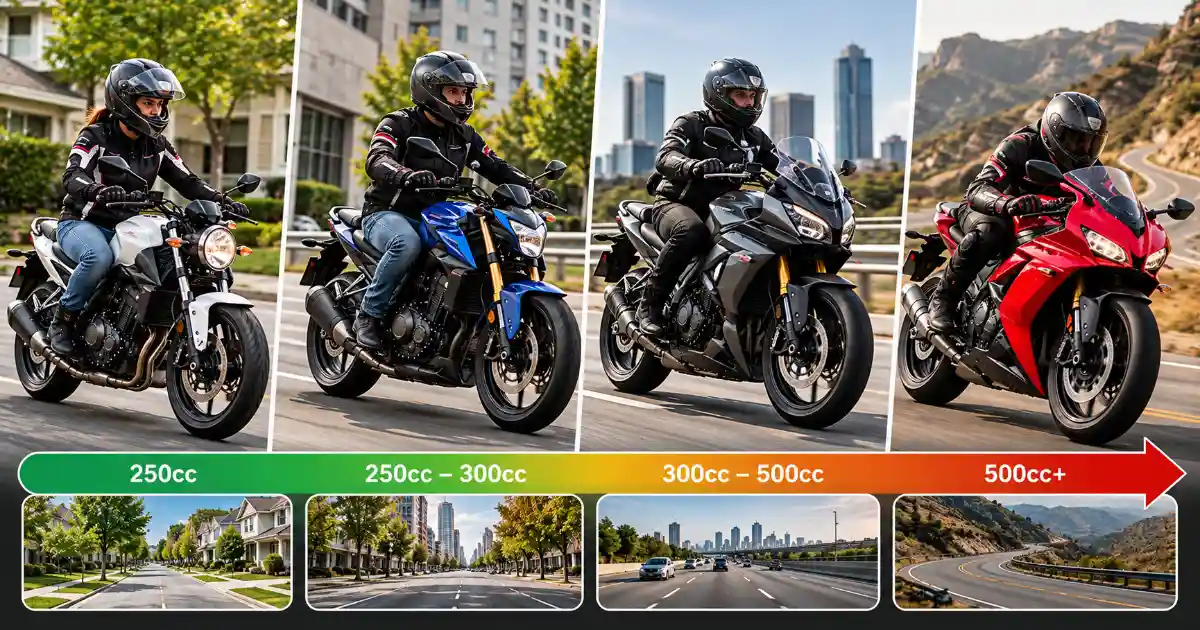
For many new riders, motorcycles in the 250cc to 500cc range are worth considering. They can provide enough performance for everyday riding while remaining more manageable than many high-powered sportbikes. However, engine size is only a starting point, not a strict rule.
A lightweight 400cc motorcycle with smooth throttle response can feel easier to ride than a heavier motorcycle with a similar engine capacity but more aggressive power delivery.
Think about where you intend to ride. If most of your trips involve neighborhood streets, local errands, and commuting on slower roads, a modestly powered motorcycle may be all you need. If your regular route includes highways, you will want enough performance to merge safely and maintain appropriate speeds without constantly pushing the engine to its limits.
The goal is to find a motorcycle that responds predictably when you accelerate, slow down, or change gears. Beginners benefit from having time to think through each action rather than managing sudden bursts of power.
What to look for: Smooth acceleration, manageable throttle response, and sufficient power for your intended roads. Do not choose a motorcycle simply because it has the largest engine you can afford.
2. Lightweight Construction and Easy Handling
A motorcycle’s weight matters most when you are moving slowly. Starting from a stop, turning in a parking lot, backing out of a driveway, or stopping on an uneven surface can be challenging for someone who has not yet developed good balance and control.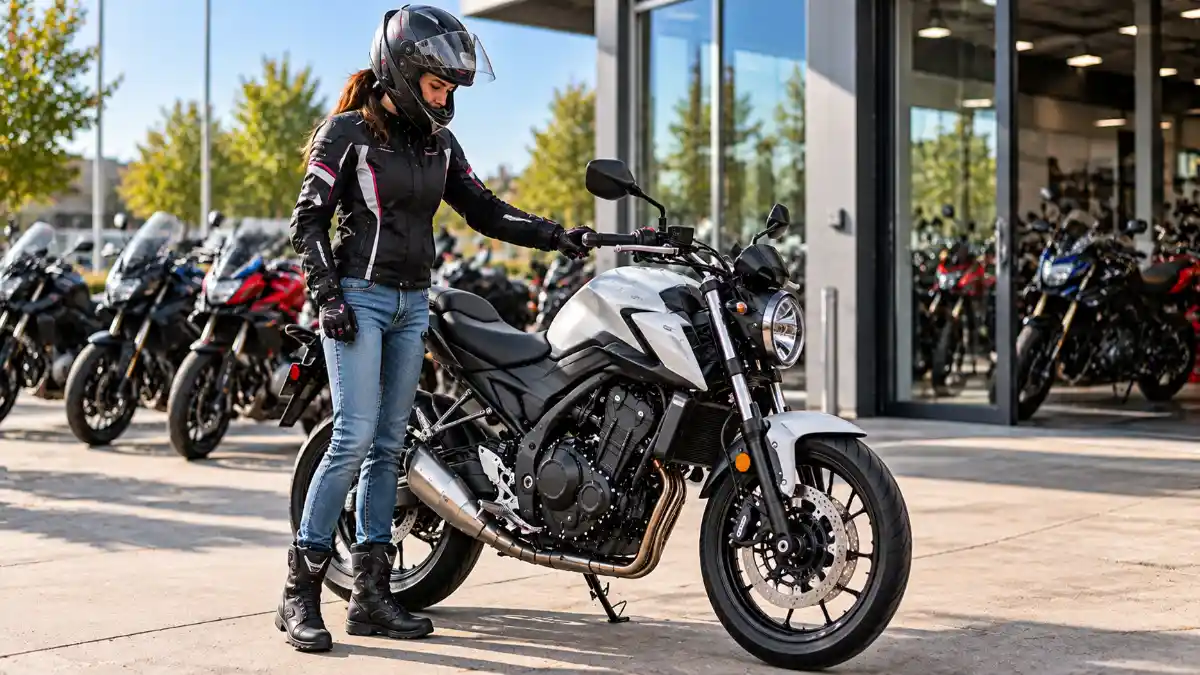
A lighter motorcycle generally makes these situations easier. It can be simpler to maneuver into a parking space and less intimidating when practicing tight turns or slow-speed control.
However, the number on the specification sheet does not tell the whole story. Weight distribution and center of gravity also influence how a motorcycle feels. A well-balanced motorcycle can feel manageable even when it weighs more than a smaller bike with an awkward balance.
Before purchasing, sit on the motorcycle and, if permitted, practice moving it while stationary. Check whether you can lift it off the side stand comfortably, hold it upright, and move it backward without struggling.
Also consider where you will park. If your garage, driveway, or apartment parking space is tight, a motorcycle that is easy to maneuver will make everyday ownership more convenient.
A beginner does not need the lightest motorcycle on the market. The important thing is to choose one that you can control confidently without feeling that its weight is working against you.
What to look for: Manageable weight, balanced handling, and easy low-speed maneuverability.
3. Seat Height and a Comfortable Riding Position
A motorcycle may have the right engine and weight yet still be a poor fit if its ergonomics do not suit your body.
Seat height is particularly important for beginners because stopping and placing a foot on the ground can feel unfamiliar at first. Riders with shorter legs may find tall adventure motorcycles difficult to manage, while taller riders may feel cramped on some compact models.
You do not necessarily need to place both feet flat on the ground. Many experienced motorcyclists stop with one foot firmly planted. Nevertheless, a beginner should be able to stabilize the motorcycle without feeling excessively stretched or off balance.
Pay attention to more than the seat. Handlebar reach, footpeg position, seat width, and the amount of room available for your legs all influence comfort.
A standard or naked motorcycle often provides an upright riding position that works well for everyday use. Cruisers usually have lower seats, although some are heavy and can be difficult to maneuver. Sportbikes may have a more forward-leaning position that becomes tiring during longer rides.
If possible, spend several minutes sitting on the motorcycle. Check that your wrists, shoulders, and back feel relaxed and that you can reach the clutch and brake levers comfortably.
Comfort is not just a luxury. When you are physically uncomfortable, it becomes harder to concentrate on traffic and riding technique.
What to look for: A natural seating position, comfortable control reach, and a seat height that allows you to stabilize the bike confidently.
4. Predictable Handling and Beginner-Friendly Controls
Learning to ride involves coordinating several actions at once. You must control the throttle, operate the clutch, shift gears when necessary, use the brakes, and maintain balance while observing traffic.
A beginner-friendly motorcycle should make these tasks feel as straightforward as possible.
A light clutch lever and a predictable engagement point can help when learning to move away from a stop. Smooth throttle response makes acceleration easier to control, while predictable brakes allow the rider to build confidence through practice.
Steering behavior also matters. A motorcycle should respond naturally to your inputs rather than feeling unusually nervous or demanding excessive effort during ordinary turns.
Some beginners may prefer a conventional manual motorcycle because it provides an opportunity to learn clutch and gear control. Others may find an automatic or clutchless model more approachable. The right choice depends on personal preference, intended use, and the skills you want to develop.
Do not assume that a motorcycle is easy to ride just because it is marketed as an entry-level model. Ergonomics and controls can vary considerably between bikes in the same category.
A supervised demonstration or a training session on a comparable motorcycle can help you understand what suits you. Never ride an unfamiliar motorcycle on public roads without the appropriate licensing, permission, and insurance.
What to look for: Smooth controls, predictable steering, manageable clutch operation where applicable, and braking that is easy to modulate.
5. Essential Safety Features, Especially ABS
Safety equipment should be part of your decision from the beginning. A beginner motorcycle does not need every electronic feature available, but certain systems can provide meaningful assistance.
Anti-lock braking system (ABS) is one of the most important features to consider.
ABS helps prevent the wheels from locking during hard braking by adjusting brake pressure when the system detects an impending wheel lock. This can help the rider maintain steering control, particularly when a sudden stop is necessary.
ABS cannot overcome the limits of tire grip, eliminate every braking risk, or guarantee a shorter stopping distance in all conditions. Still, it offers a useful additional layer of protection for a rider who is developing emergency-braking skills.
When comparing motorcycles, check whether ABS is standard, optional, or unavailable on the exact model and trim you are considering. Features can differ by model year and market.
Traction control is another feature worth understanding. It can help reduce rear-wheel spin when acceleration exceeds the available grip. However, it is not available on every entry-level motorcycle and should not be treated as a substitute for smooth throttle control.
Other important details include good lighting, visible turn signals, reliable brakes, and quality tires. On a used motorcycle, inspect tire condition and age, brake wear, warning lights, and the general condition of the controls.
Your own protective equipment matters just as much. Budget for a properly fitted motorcycle helmet that meets applicable U.S. Department of Transportation standards, gloves, sturdy riding footwear, and protective clothing.
What to look for: ABS where available, dependable brakes, good tires, effective lighting, and enough budget for protective gear.
6. Purchase Price, Insurance, and Everyday Ownership Costs
A motorcycle’s sticker price can be misleading if you have not considered the cost of owning it.
In the United States, the total expense may include sales tax, title and registration fees, dealer charges, insurance, protective equipment, fuel, and regular maintenance. These costs vary by state, location, motorcycle, and rider.
Insurance is particularly important. Premiums can differ substantially depending on your age, riding experience, driving record, location, coverage, and motorcycle type. A high-performance sportbike may cost more to insure than a modest commuter motorcycle, even when their purchase prices are similar.
Get insurance quotes for the specific models you are considering before making a decision. If you plan to finance the motorcycle, check the lender’s insurance requirements as well.
Maintenance is another consideration. Tires, brake pads, chains and sprockets, fluids, and scheduled servicing all add to the cost of ownership. Some motorcycles may also require more expensive parts or specialized service.
A used motorcycle can reduce the initial cost, but a low purchase price is not necessarily a bargain if it needs immediate repairs. Ask about maintenance records and have a qualified mechanic inspect an unfamiliar used bike.
It is wise to keep some money available after the purchase rather than spending your entire budget on the motorcycle itself.
What to look for: Affordable insurance, reasonable maintenance expenses, readily available parts, and a total cost that leaves room for safety equipment and training.
7. Reliability and the Right Motorcycle for Your Lifestyle
Your first motorcycle should suit the way you actually plan to ride. A bike that is excellent for short city trips may not be the best choice for long highway commutes or weekend adventures.
Start by considering your regular routes and riding conditions.
For urban commuting, a compact standard motorcycle may be practical because it is relatively easy to maneuver and park. If you prefer relaxed weekend rides, a manageable cruiser could be a better fit. Riders interested in occasional dirt roads may want to consider a suitable dual-sport model.
Highway riding deserves particular attention in the United States. If your commute involves fast-moving traffic, choose a motorcycle with enough performance for appropriate acceleration and highway speeds. Seat comfort, wind exposure, stability, and fuel range become more important on longer journeys.
Reliability should also influence your decision. Established models with accessible replacement parts, a good maintenance history, and readily available service information can make ownership less complicated.
Research the service schedule and check whether local dealerships or independent mechanics can work on the motorcycle. If buying used, verify the title, examine the frame and controls, and look for signs of crash damage or neglected maintenance.
Finally, think about how your skills may develop. You may eventually want a larger or more specialized motorcycle, but your first bike does not need to satisfy every future ambition. Choosing a manageable motorcycle now can help you develop a solid foundation before moving on to something more demanding.
What to look for: A motorcycle that matches your riding environment, has a sound maintenance history, and can be serviced without unreasonable expense.
Which Type of Motorcycle Should a Beginner Choose?
Once you have considered the seven factors, compare motorcycle styles that match your needs.
| Motorcycle type | Potential advantages | What to consider |
|---|---|---|
| Standard or naked | Upright position, versatile everyday use | Seat height and wind protection |
| Small sportbike | Sporty styling, engaging handling | Riding posture and insurance costs |
| Cruiser | Relaxed ergonomics, often a low seat | Weight and low-speed maneuverability |
| Dual-sport | Upright position, suitable for some paved and unpaved routes | Seat height and off-road demands |
| Small commuter | Practical for local trips and everyday transportation | Highway capability and storage needs |
For many beginners, a standard or naked motorcycle is a useful starting point because it can balance comfort, handling, and everyday practicality. However, no category is automatically right for every rider.
Compare individual models rather than relying on the category name alone.
Should You Buy a New or Used Beginner Motorcycle?
Both options can make sense, depending on your budget and priorities.
A new motorcycle offers a known starting point for maintenance and may include a manufacturer’s warranty. Depending on the model, it may also offer updated safety equipment. The trade-offs include a higher purchase price and depreciation.
A used motorcycle may offer better value, especially if you find a well-maintained model with service records. However, inspect it carefully before buying.
Check the tires, brakes, chain and sprockets where applicable, lights, controls, frame, and engine for signs of damage or neglect. Confirm that the vehicle identification number matches the title and that the seller can legally transfer ownership.
If you are not experienced with motorcycle inspections, arrange an independent check by a qualified mechanic. A professional inspection may cost money upfront, but it can help identify problems that would otherwise become expensive after purchase.
Do not rush into a purchase because a seller claims the motorcycle is perfect for beginners. The condition, fit, and suitability of the individual bike matter more than the sales pitch.
Common Mistakes First-Time Motorcycle Buyers Should Avoid
Even after doing research, new riders can make a few avoidable mistakes.
Choosing too much power: A powerful motorcycle can be exciting, but it may demand more control than a beginner has developed.
Prioritizing appearance over fit: A motorcycle should feel comfortable and manageable, not simply look impressive.
Ignoring insurance quotes: Check the actual premium before committing to a model.
Spending the entire budget on the bike: Protective gear, training, and maintenance are essential expenses.
Assuming a low seat guarantees easy handling: Weight distribution and balance matter too.
Skipping an inspection: Used motorcycles should be checked carefully, especially if their maintenance history is unclear.
Riding in demanding traffic too early: Develop basic control skills in an appropriate training environment before tackling challenging roads.
Taking time to choose carefully can help make your first riding season more enjoyable and less stressful.
Final Verdict: What Makes a Good Beginner Motorcycle?
A good beginner motorcycle is not necessarily the smallest, cheapest, or most powerful bike available. It is one that fits your body, responds predictably, feels manageable at low speeds, and meets your everyday riding needs.
For many new riders in the United States, a modestly powered standard motorcycle or naked bike is an excellent place to start. A small sportbike, cruiser, or dual-sport can also be suitable when its weight, ergonomics, and performance match the rider.
Before buying, evaluate engine power, weight, seat height, handling, safety features, ownership costs, and reliability. Give particular attention to ABS, insurance premiums, and the condition of a used motorcycle.
Most importantly, invest in proper rider training and protective equipment. A suitable motorcycle can make learning easier, but good judgment and consistent practice are what help you become a capable rider.
The best first motorcycle is the one that lets you concentrate on learning, ride within your abilities, and enjoy the experience without feeling that you have taken on more bike than you can comfortably handle.
Beyond the 2,000-Yard Club: Ranking the Best Rushing Seasons in NFL History
Safety disclaimer: This article provides general buying guidance, not a guarantee that any particular motorcycle is safe for every beginner. Follow the manufacturer’s instructions, comply with your state’s licensing and equipment requirements, wear appropriate protective gear, and consider completing a recognized motorcycle safety course before riding on public roads.