
 Understand what a car warranty covers, including exclusions, voiding rules, coverage limits and extended warranty plans.
A car warranty is a promise from the manufacturer to fix certain defects for a set period. That sounds simple until you need a repair and learn that one part is covered, another is “wear and tear,” and a third was excluded in the fine print. Many owners discover the difference at the service counter, when it is too late to read the booklet carefully.
This guide explains what a new-car warranty typically covers, what it excludes, how the main warranty types differ, what can cause a claim to be denied, and how extended warranties (which are actually service contracts) fit in. It is written for US buyers and draws on the Federal Trade Commission (FTC), the Environmental Protection Agency (EPA), AAA, RepairPal and AutoGuide. It is general information, not legal advice. Every manufacturer’s warranty differs, so the booklet that came with your car, or the one you can request before you buy, is the final word.
What Does a Car Warranty Cover? The Short Answer
A new-car factory warranty generally covers defects in materials or workmanship, not damage you cause and not parts that simply wear out. It usually comes as several warranties running at once:
- Bumper-to-bumper (basic or comprehensive). Covers most of the vehicle. Often 3 years or 36,000 miles, whichever comes first, though some automakers go longer.
- Powertrain. Covers the engine, transmission and drivetrain. Often 5 years or 60,000 miles, with 10 years or 100,000 miles at some brands.
- Emissions. Federally required coverage for emission-control parts.
- Corrosion (rust-through). Terms vary by brand.
- Hybrid and EV batteries. Covered separately, and terms vary.
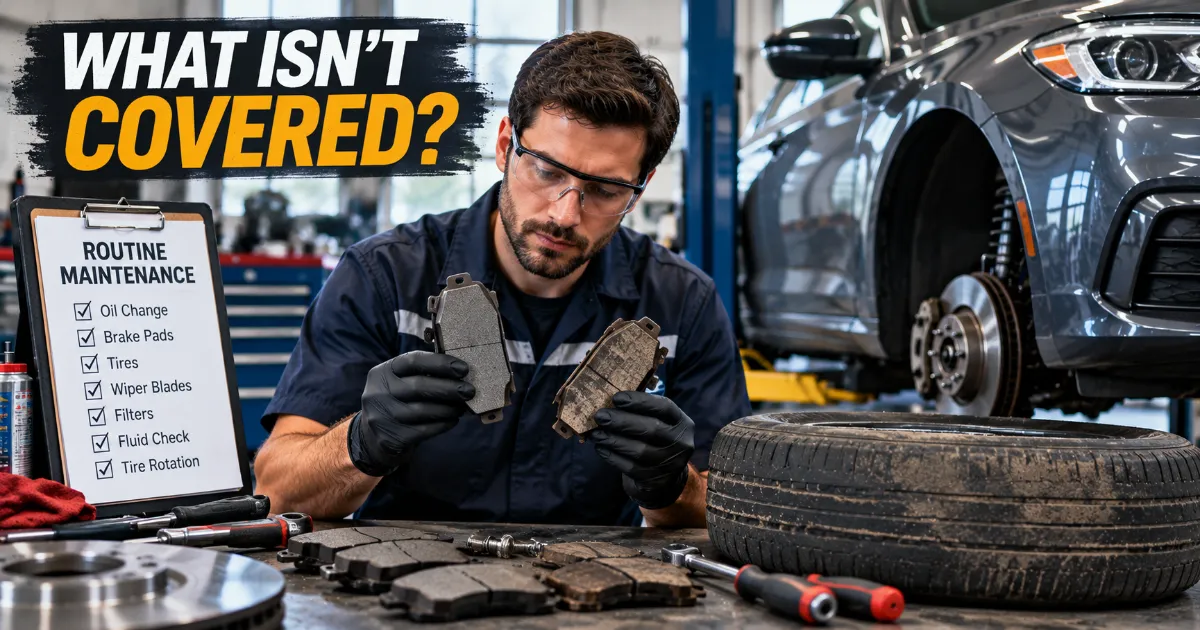
What a warranty does not cover is just as important: routine maintenance, wear items, accident damage, neglect and misuse. The sections below go through each.
Bumper-to-Bumper Coverage
Despite its name, a bumper-to-bumper warranty does not cover literally everything between the bumpers. AutoGuide describes it as exclusionary coverage: only parts listed as excluded are not covered. AAA says it covers nearly every component against defects, including electrical systems, heating and air-conditioning components, steering and suspension hardware, and seals and gaskets, with some shocks possibly treated as wear items. AutoGuide adds that bumper-to-bumper plans cover high-tech systems and electronics, while powertrain plans do not.
Typical terms. AAA says bumper-to-bumper coverage is often 3 years or 36,000 miles, whichever comes first, and that some automakers offer 5 years or more. RepairPal gives a wider range, from 3 years and 36,000 miles to 6 years and 72,000 miles. AutoGuide puts the average at 3 years or 36,000 miles, and says the best new-car plans offer up to 5 years or 60,000 miles.
Brand examples from RepairPal (an undated page, so confirm current terms with the manufacturer):
| Brand | Bumper-to-bumper | Powertrain |
|---|---|---|
| Hyundai, Kia | 5 years / 60,000 miles | 10 years / 100,000 miles |
| Toyota, Ford, Honda | 3 years / 36,000 miles | 5 years / 60,000 miles |
| Volkswagen | 6 years / 72,000 miles | 6 years / 72,000 miles |
| BMW, Audi, Mercedes-Benz | 4 years / 50,000 miles | 4 years / 50,000 miles |
Warranty terms change by model year and sometimes by model, so treat the table as an illustration of how much terms vary, not as current promises.
Powertrain Coverage
The powertrain warranty covers the parts that make the car move. AAA lists the engine, transmission and drivetrain parts, including the transfer case on four-wheel-drive and all-wheel-drive vehicles. RepairPal lists engine, transmission, axles and differential, and notes that a powertrain warranty typically excludes fluids, belts and most electrical and electronic components, which may fall under bumper-to-bumper coverage instead.
Powertrain coverage is usually longer than bumper-to-bumper coverage. RepairPal notes the exception: most European luxury brands, where the two terms are often the same.
What a Car Warranty Does Not Cover
Across the sources reviewed, the exclusions fall into five groups.

1. Routine maintenance. Oil changes, tire rotations, filters and coolant flushes are your cost. The sources reviewed do not name spark plugs or similar consumables, so check your own booklet.
2. Wear items. AAA lists brake pads, tires, wiper blades and clutch discs. RepairPal lists brake pads, wiper blades, body damage, broken glass and fabric wear, unless a manufacturing defect caused the problem. AutoGuide adds shock absorbers, windshield glass, tires and wheels, interior trim, upholstery, seat belts, corrosion, body panels and paint as commonly excluded, and notes this varies by provider.
3. Accidents and outside damage. AAA says collision and road-hazard damage are an insurance matter, as are environmental and weather damage such as flood, hail or animals.
4. Neglect and misuse. Damage from poor maintenance, improper repair or abuse is excluded. RepairPal says most warranties will not cover a vehicle used for racing, and that heavy-duty off-roading or other extreme use is typically excluded.
5. Items with separate terms. RepairPal notes tires and infotainment (stereos, navigation, touchscreens) often have separate, shorter or manufacturer-specific terms.
A useful rule from the FTC’s consumer advice on warranties: check what is listed as covered and what is excluded, and “if they aren’t listed, assume they aren’t covered.”
Emissions Warranty: A Federal Floor
Emissions coverage is the one warranty with federal requirements behind it. EPA’s consumer fact sheet (October 2009, revised September 2012) describes two kinds:
- Design and defect warranty. Emission control and emission-related parts are covered for 2 years or 24,000 miles. Specified major emission control components are covered for 8 years or 80,000 miles, and parts that fail because of defects in materials or workmanship are repaired or replaced free of charge.
- Performance warranty. For 2 years or 24,000 miles, repairs needed to pass a locally required emissions test are covered, with the major components again covered for 8 years or 80,000 miles. The vehicle must fail an approved inspection and maintenance test, the state or locality must require the repair, and the failure must not result from misuse or missed maintenance.
The “major” components EPA names are the catalytic converter, the electronic emissions control unit and the onboard emissions diagnostic device. EPA describes the catalytic converter as a “very expensive part to replace” when damaged by neglected maintenance. The fact sheet is more than a decade old, so confirm current terms with the manufacturer or EPA, and note that some states, such as California, have their own rules that the fact sheet does not describe.
Hybrid and EV Batteries
Here the sources do not fully agree. AAA says traction batteries in hybrids and EVs are covered for at least 8 years or 100,000 miles under federal law. RepairPal says hybrid and EV batteries carry at least 8 years, and treats them as part of the emissions system, without giving a mileage figure. Because the sources differ, read the battery section of the specific car’s warranty. One Toyota dealer page, for example, lists hybrid components at 8 years or 100,000 miles, and the hybrid battery on 2020-and-later models at 10 years or 150,000 miles, which shows manufacturer terms can exceed a minimum.
What Can Void a Warranty, and What Cannot
This is where myths are common. The FTC’s advice is clear on several points:
- You do not have to use the dealer for routine maintenance or repairs on a new vehicle, and denying coverage only because another shop did the work is illegal.
- Aftermarket and recycled parts do not automatically void coverage. If one causes damage, the manufacturer or dealer must prove that the part caused it before denying coverage.
- There is an exception for free work. If a warranty covers work or parts “for free,” the dealer or manufacturer can require you to use its chosen facilities or parts. That is a separate matter from paid maintenance.
AAA and RepairPal agree on the practical side. The most common cause of denial, AAA says, is skipping the manufacturer’s maintenance schedule, and other causes include wrong fluids and use outside the vehicle’s intended purpose. RepairPal adds odometer tampering, modifications that cause engine, transmission or suspension damage (which it calls a gray area), and continuing to drive with a known problem, which can cause uncovered damage to other parts.
Keep records. All three sources recommend keeping maintenance receipts, because the warranty company may ask for them. You can use any qualified shop, as long as you follow the schedule in your owner’s manual and can show you did.
Used Cars, Certified Pre-Owned and Transfers
AAA says factory warranties transfer to the next owner if you sell while coverage remains. RepairPal says it gives little detail on transfers of new-car warranties and that certified pre-owned (CPO) transferability varies by manufacturer, so check your booklet.
For CPO cars, AAA says coverage typically adds 1 to 2 years of bumper-to-bumper protection after the original expires, with powertrain coverage often reaching 7 years or 100,000 miles. RepairPal says CPO deductibles and terms differ by brand and some require scheduled maintenance. The FTC notes only that a used vehicle “might come with some type of warranty coverage,” so ask what, if anything, applies to the specific car and get it in writing.
Extended Warranties Are Usually Service Contracts
The FTC explains that what people call an extended warranty is usually a service contract: an optional agreement, sold by manufacturers, dealers or independent companies, in which the seller agrees to perform or pay for specified repairs. Because it is bought separately, the FTC says it is not a warranty as federal law defines the term. Contracts typically do not cover accident damage or normal wear and tear.
Cost and value. AAA says multi-year plans often cost $2,000 to $4,000 in total. RepairPal, citing Consumer Reports, reports that 55% of owners never used their plan and 75% of those who bought one said they would not again, and that most owners who used a plan spent more on it than they saved on repairs. Those figures come from a survey cited second-hand and are not dated in the source, so treat them as a caution, not a forecast.
When one might make sense. RepairPal lists keeping the car long-term, poor-to-fair reliability ratings, high repair costs, or a budget that cannot absorb a large bill. It lists leasing, selling before the factory warranty ends, strong reliability and having savings for a large repair as reasons not to buy, and suggests a dedicated repair fund as an alternative.
What to check before signing, according to the FTC:
- Compare the contract’s dates with the factory warranty. Overlap may add little value.
- Get cost, deductibles and coverage in writing, including limits on towing, rental cars, parts depreciation, remanufactured parts and labor.
- Find out who backs the contract. Dealers often use independent administrators.
- Confirm the length, transferability and fees.
- Ask where you can get service and whether pre-approval is required.
- Follow the maintenance schedule and keep receipts, because skipping maintenance may void the contract.
- Take time to review the paperwork, since add-ons are often presented late in the buying process.
Beware of scams. The FTC warns about unsolicited calls, texts or mail about an expiring warranty, using phrases such as “Final Warranty Notice.” These companies probably are not affiliated with your dealer or manufacturer, and they may pressure you for payment before explaining the contract.
Implied Warranties and Lemon Laws
Beyond the written warranty, the FTC says every state creates unspoken promises that apply to most purchases. These include the implied warranty of merchantability (the product should do what it is normally supposed to do, such as a car running) and fitness for a particular purpose. They do not apply if the seller gives written notice that there is no warranty or sells the item “as is,” where state law allows, and in some states they can last up to four years. The FTC suggests contacting a lawyer or state consumer protection office for details.
Lemon laws are state laws, and they vary. As one example only, New York’s new-car lemon law applies when a problem continues after four or more repair attempts, or the car is out of service for a total of 30 or more days, for a car bought, leased or transferred within 18,000 miles or two years of original delivery, whichever came first, and used primarily for personal purposes. Remedies can include a refund or a replacement. Other states set different thresholds and time limits, and I did not find a reliable summary covering all states, so look up your own state’s law through its attorney general.
How to Make a Warranty Claim
The FTC’s steps for a claim are:
- Contact the seller first.
- If the seller does not resolve it, write to the manufacturer. The warranty should list the address.
- Send the letter by certified mail with a return receipt, so you can prove delivery.
- Expect that the company may have the right to fix the product before refunding your money.
- Know that a defect reported during the warranty period must be properly corrected even if the warranty expires first.
If those steps fail, the FTC suggests reporting the problem to your state attorney general or the FTC at ReportFraud.ftc.gov. Keep every work order, receipt and email along the way.
A Pre-Purchase Warranty Checklist
- Read the warranty booklet before you buy. Federal law requires a written warranty to be available for you to read before purchase, in person or online, according to the FTC.
- Write down every term: bumper-to-bumper, powertrain, emissions, corrosion, battery, and any limits on tires or infotainment.
- Check transferability if you might sell before coverage ends.
- Ask what counts as wear on the parts you care about.
- Plan your maintenance schedule and where you will keep receipts.
- Be cautious about add-ons pushed late in the paperwork.
- Put spoken promises in writing, since the FTC notes a business may later refuse to honor a promise that is not written down.
Frequently Asked Questions
What does a car warranty cover?
A new-car warranty generally covers defects in materials or workmanship. Bumper-to-bumper coverage handles most of the vehicle, powertrain coverage handles the engine, transmission and drivetrain, and separate emissions, corrosion and battery coverage may apply. Terms vary by manufacturer.
What does a car warranty not cover?
Typically routine maintenance, wear items such as brake pads, tires and wiper blades, accident and weather damage, and damage from neglect or misuse. Check the booklet for your car.
How long does a new car warranty last?
Often 3 years or 36,000 miles for bumper-to-bumper and 5 years or 60,000 miles for powertrain, per AAA, though some brands offer longer, such as 5 years or 60,000 miles and 10 years or 100,000 miles at Hyundai and Kia per RepairPal.
Does using an independent shop void my warranty?
No, according to the FTC, which says denying coverage only because another shop did the work is illegal for new vehicles. Keep records showing you followed the maintenance schedule.
Do aftermarket parts void the warranty?
Not automatically. The FTC says that if an aftermarket part causes damage, the manufacturer or dealer must prove it before denying coverage for that damage.
Is an extended warranty worth it?
It depends. The FTC says an extended warranty is usually a service contract, and AAA says plans often cost $2,000 to $4,000. RepairPal cites Consumer Reports data suggesting many owners never use them. Compare the coverage with your factory warranty and your budget for repairs.
Does the warranty transfer if I sell my car?
AAA says factory warranties transfer to the next owner if coverage remains. CPO and extended-plan transfers vary, so check the contract.
What is a lemon law?
A state law that can give a refund or replacement for a new car with a defect that repeated repairs do not fix. Terms vary by state. New York’s, for example, uses four or more repair attempts or 30 or more days out of service.
Are catalytic converters covered?
Under EPA’s federal emissions warranty fact sheet, catalytic converters are among the major emission control components covered for 8 years or 80,000 miles, subject to conditions such as proper maintenance and no misuse.
The Bottom Line
What does a car warranty cover? Defects, not wear, maintenance, accidents or neglect. Read the booklet, keep your maintenance records, remember that independent shops and aftermarket parts do not automatically void coverage, and treat extended warranties as optional service contracts that deserve careful comparison. When in doubt, ask for the terms in writing before you buy and again before you file a claim.
🔹🔹 Follow us on Facebook 🔹🔹