
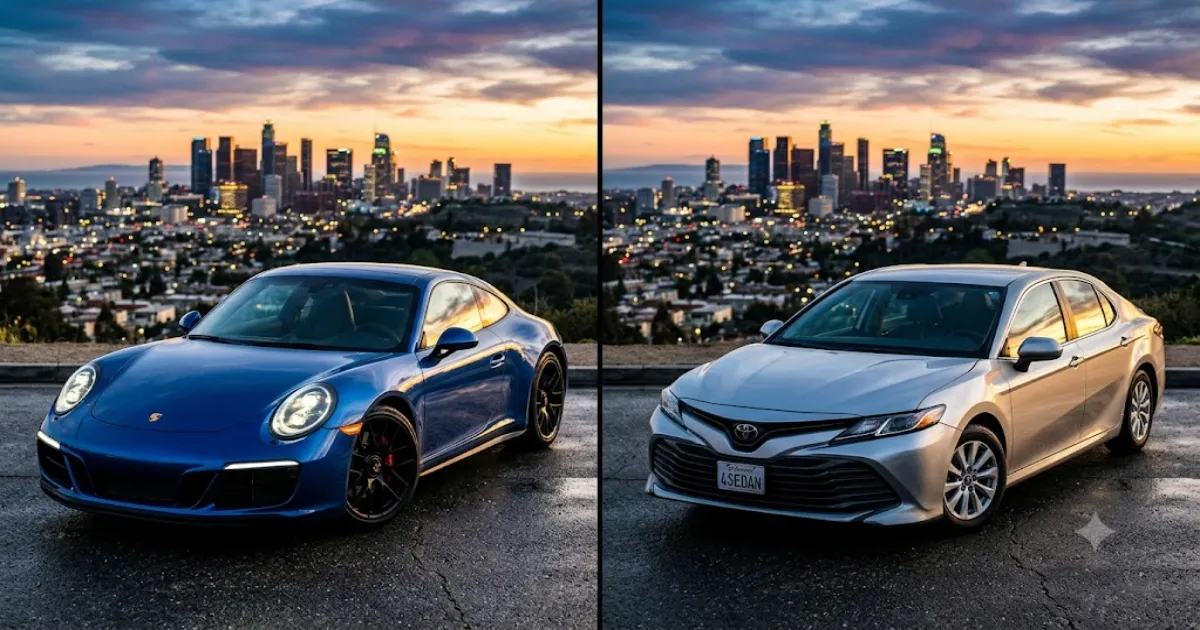
 Depreciation, financing, reliability and long-term costs weighed up to settle new vs. used cars
Almost every car buyer eventually hits the same fork: pay more for a new car with a full warranty, or pay less for a used one and accept some unknowns. The usual advice is that used is cheaper. That is often true, but the full picture is more interesting. Used-car loans carry higher interest rates, used prices have risen, and a new car’s biggest cost, depreciation, is paid by whoever owns it in its early years.
This guide weighs new vs. used cars on the factors that decide the money: purchase price, depreciation, financing, warranty and reliability, running costs and how long you plan to keep the car. It uses current US data from Cox Automotive and Kelley Blue Book, Edmunds, Experian, AAA, iSeeCars and J.D. Power. It is general information, not personalized financial advice, and your best answer depends on your budget, credit, mileage and risk tolerance.
Which Car Type Is Best for You: Sedan, SUV, Hatchback or Truck?
Why Some Car Brands Cost More to Maintain Than Others ?
The Short Answer
For most buyers who drive their cars for many years, a well-chosen used or certified pre-owned (CPO) car is likely to cost less per year of ownership, mainly because someone else has already absorbed the steepest depreciation. A new car can still win when you qualify for low-rate financing or incentives, want a full factory warranty, plan to keep the car a very long time, or cannot find a good used example in the model you want. The rest of this article shows how to tell which situation you are in.
What New and Used Cars Cost Right Now
Kelley Blue Book, part of Cox Automotive, reported that the average new-vehicle transaction price in September 2026 was $50,562, up 0.7% from a year earlier and just $52 below the all-time high of $50,614 set in December 2025. The average manufacturer incentive was $3,359, or 6.6% of the transaction price, down 8.8% from a year earlier.
For used cars, the sources reviewed here give less consistent measures. Autotrader data cited by ConsumerAffairs put the average used-car listing price at $27,239 in August 2026, up 7% from a year earlier. That is a dealer asking price, not what buyers actually paid, so it is not directly comparable with the transaction price for new cars. Cox Automotive’s Manheim index, which tracks wholesale prices that dealers pay, was down 0.6% from a year earlier in September 2026, with depreciation accelerating in the third quarter after stronger-than-normal gains earlier in the year.
Taken together, the gap between a typical new car and a typical used one is still large, roughly $23,000 between the two headline averages, though the two figures measure different things and your actual savings depend on the specific cars you compare.
New vs. Used Cars: The Depreciation Math
Depreciation is the loss in a car’s value over time, and it is usually the largest single cost of owning a new car. AAA’s 2026 Your Driving Costs study puts depreciation at an average of $4,422 a year for a new vehicle, the largest single item in its breakdown, ahead of insurance ($2,098) and finance charges ($1,184).
The iSeeCars study of about 950,000 five-year-old cars sold between March 2025 and February 2026 found an average five-year depreciation of 41.8% of the original sticker price, or about $16,571. In that data, hybrids averaged 35.4%, better than the overall average. Individual models varied widely:
| Model (iSeeCars, five-year depreciation) | Share of price lost |
|---|---|
| Porsche 718 Cayman | 9.6% |
| Porsche 911 | 11.1% |
| Chevrolet Corvette | 18.7% |
| Tesla Model S | 62.0% |
| Volkswagen ID.4 | 62.1% |
| Infiniti QX80 | 62.8% |
| Nissan Leaf | 63.1% |
Two lessons follow.
First, depreciation is not evenly distributed over time. The iSeeCars figures cover only five-year totals, and the sources reviewed here do not give a year-by-year curve. It is widely understood that value loss is steepest early on, so the buyer of a gently used car often avoids a large share of it. Check the specific model’s resale history on tools like Kelley Blue Book or Edmunds before assuming a rule of thumb.
Second, the model matters more than the label. A used car that depreciated sharply before you bought it, such as one of the models at the bottom of the table, may be a bargain. A new car in a model that holds its value may cost little more to own than a used one. Cox Automotive noted that in the third quarter of 2026, large pickups and SUVs lost value as fuel costs rose, while older and more affordable vehicles depreciated less. It also noted that wholesale EV values increased, so depreciation patterns can shift over a short period.
A hypothetical example
Suppose a model sells new for $40,000 and loses the 41.8% industry-average share of its sticker price over five years. That is about $16,720. A buyer who purchases it new and keeps it five years absorbs that loss. A buyer who buys it five years old pays a price that already reflects it. This is a simplified illustration, not a prediction, and it ignores dealer markups, market swings and the used car’s own future depreciation.
Financing: Where Used Cars Lose Some of Their Advantage
A cheaper used car usually means a smaller loan, but interest rates are higher, which narrows the gap. Two lenders’ data sets show the same pattern:
| Measure | New | Used | Source |
|---|---|---|---|
| Average APR, Q2 2026 | 6.35% | 11.19% | Experian |
| Average amount financed, Q2 2026 | $43,610 | $27,852 | Experian |
| Average monthly payment, Q2 2026 | $765 | $542 | Experian |
| Average APR, Q3 2026 | 7% | 10.6% | Edmunds |
| Average amount financed, Q3 2026 | $44,664 | $30,703 | Edmunds |
| Average monthly payment, Q3 2026 | $787 | $582 | Edmunds |
The two sources measure different quarters and use different methods, so their numbers differ. They agree on the structure: the used-car buyer finances about $14,000 to $16,000 less and pays roughly $200 less per month, but at an interest rate roughly 3.6 to 4.8 percentage points higher. Edmunds also reported that the average new-car buyer will pay $9,938 in total interest, and that 25.5% of new loans run 84 months or longer. Its figures for used-loan interest and term were not reported in the sources reviewed.
Practical takeaways:
- Get pre-approved before you shop. A credit union or bank quote shows you what rate you qualify for and gives you leverage at the dealership.
- Compare total cost, not the monthly payment. A longer loan lowers the payment but raises the interest you pay and keeps you “underwater,” owing more than the car is worth, for longer.
- Look at manufacturer incentives on new cars. The average incentive was $3,359 in September 2026. Special financing offers vary by brand, model and your credit, and the data reviewed here does not quantify how common low-rate deals are.
- A shorter used loan can beat a longer new one. If you can afford higher payments, paying off a used car quickly limits the effect of its higher APR.
Reliability and Repair Costs
New cars come with a factory warranty, and that is one of the strongest arguments for buying new. As an example, one Toyota dealership’s warranty page lists a basic warranty of 3 years or 36,000 miles and a powertrain warranty of 5 years or 60,000 miles, with hybrid components covered longer. Terms vary by brand, so check the manufacturer’s current terms for any car you are considering.
For used cars, three situations are worth separating:
- A used car still under factory warranty. A one- or two-year-old car may keep some of its original coverage, depending on the maker’s terms.
- A certified pre-owned car. Toyota’s CPO program, as listed on the same dealer page, includes a 12-month, 12,000-mile limited comprehensive warranty and a 7-year, 100,000-mile limited powertrain warranty counted from the original first-use date. Edmunds says CPO cars typically cost a few hundred to several thousand dollars more than non-certified used cars, come with manufacturer-backed extended coverage, and often include roadside assistance or other perks. It cautions that CPO programs differ, that some dealers sell “look-alike” certified warranties that rarely match manufacturer standards, and that CPO does not guarantee a trouble-free car.
- A standard used car. Edmunds notes these are usually sold as-is, though some dealers offer limited warranties, and recommends a pre-purchase inspection, which it says costs about $200 to $300.
What does reliability data say? J.D. Power’s 2026 Vehicle Dependability Study surveyed over 33,000 original owners of 2023 models after three years and found an industry average of 204 problems per 100 vehicles, up 2 from the prior year and the highest since the study was redesigned in 2022. The top problem areas were infotainment systems, over-the-air software updates and vehicle exteriors, with Android Auto and Apple CarPlay connectivity the most-cited issue for the third year running. Gas-powered vehicles were the most dependable by powertrain type, and plug-in hybrids had the most problems. In other words, many problems in three-year-old cars were software and connectivity annoyances, not necessarily major mechanical failures, though the study counts problems of all kinds. It also covers only original owners of three-year-old cars, so it says little about older used cars.
Long-Term Ownership Costs
Purchase price is only part of the cost. AAA’s 2026 study estimates that owning and operating a new vehicle costs an average of $12,863 per year, about $1,072 a month or nearly 86 cents per mile, assuming 15,000 miles a year over five years and a sales-weighted average sticker price of $39,376 across 34 popular models.
| AAA 2026 annual cost, new vehicle | Amount |
|---|---|
| Depreciation | $4,422 |
| Insurance | $2,098 |
| Finance charges | $1,184 |
| License, registration and taxes | $802 |
| Fuel (17.3 cents per mile) | about $2,600 |
| Maintenance, repairs and tires (11.7 cents per mile) | about $1,755 |
The fuel and maintenance dollar amounts above are my calculation from AAA’s per-mile rates at 15,000 miles a year, and AAA notes that its methodology changed, so 2025 and 2026 totals are not directly comparable. The study covers new vehicles only, so the sources reviewed here do not give an equivalent used-car figure.
What this shows is which items can move depending on what you buy:
- Depreciation and finance charges, $5,606 combined, are the items most likely to be lower with a used car, though a higher loan rate partly offsets the gain.
- Maintenance and repairs are likely to be lower on a new car in the first years, thanks to the warranty, and rise as any car ages. The study does not break this out by vehicle age.
- Insurance, taxes and registration depend on the car’s value, your state and your driving record. The sources reviewed do not show how used and new compare, so get quotes for the specific vehicles before you decide.
- Fuel depends on the model, not on whether it is new. A fuel-efficient used car can beat a thirsty new one.
More Factors to Weigh
How long you will keep it. Long ownership spreads a new car’s depreciation over more years and lets you benefit from the warranty. If you plan to sell in three years, you absorb the steep early loss. If you plan to drive a car for ten years, buying new may cost less per year than it first appears.
Cash vs. financing. Paying cash removes the interest penalty on used cars. Financing at a low promotional rate can make new cars more competitive.
The model you want. Some models, such as the Porsche 911 and Corvette in the iSeeCars data, lose little value, so buying new costs less than the sticker price suggests. Others lose more than half in five years, so a used example may be a bargain.
Availability and choice. New buyers can choose exact trim, color and options. Used buyers choose from what is for sale, and CPO programs have age and mileage limits, as Edmunds notes.
Risk tolerance. If an unexpected repair bill would strain your budget, the warranty on a new or CPO car has real value. If you can handle surprises and get an inspection, a standard used car can save more.
Features and technology. Newer cars may offer newer safety and convenience features, but the sources reviewed here do not rank specific features, so check the equipment list and IIHS ratings for the exact model year you are considering.
Which Should You Choose?
| If you… | Lean toward |
|---|---|
| Want the lowest cost per year and can accept some risk | Used, with an independent inspection |
| Want lower cost with a warranty | Certified pre-owned |
| Qualify for low-rate financing or large incentives and plan to keep the car a long time | New |
| Have limited savings and cannot absorb a repair bill | New or CPO |
| Are shopping a model with unusually high depreciation | Used |
| Are shopping a model that holds its value very well | New, or a nearly new used car if the price gap is small |
How to Run the Numbers Yourself
- Price two or three specific vehicles, one new and one or two used, with similar equipment.
- Get loan quotes for each. Use the actual rate you qualify for, not an average.
- Estimate resale value at the end of the time you will own it, using valuation tools.
- Add insurance quotes, expected fuel and maintenance.
- Subtract expected resale value from purchase price plus interest, then divide by the years you plan to own the car. That gives a per-year cost you can compare.
- Add the risk factor. Ask what you would do if a major repair arrived in year four.
Frequently Asked Questions
Is it cheaper to buy a new or used car?
Used is usually cheaper to buy. Cox Automotive’s September 2026 new-car average of $50,562 is far above Autotrader’s August 2026 average used listing price of $27,239, though the two measure different things. Total cost depends on depreciation, interest rates and repairs, so compare specific vehicles.
How much does a new car depreciate?
iSeeCars found an average of 41.8% of sticker price over five years for cars sold between March 2025 and February 2026, with large differences by model, from 9.6% for the Porsche 718 Cayman to 63.1% for the Nissan Leaf. AAA’s 2026 study uses an average of $4,422 per year for new cars.
Are used car loans more expensive than new car loans?
The rate usually is. Experian’s Q2 2026 data shows 11.19% for used versus 6.35% for new, and Edmunds’ Q3 2026 data shows 10.6% versus 7%. But used buyers finance less money and pay lower monthly payments on average.
Is a certified pre-owned car worth it?
It can be if you value a manufacturer-backed warranty and inspection. Edmunds says CPO cars typically cost a few hundred to several thousand dollars more than non-certified used cars, and that programs differ, so read the specific program’s terms.
How much does a pre-purchase inspection cost?
Edmunds says about $200 to $300 for a standard used car.
Are new cars more reliable than used cars?
Not necessarily in a simple way. New cars come with warranties, so repair costs are covered early. J.D. Power’s 2026 study found 204 problems per 100 vehicles on average for three-year-old 2023 models, with infotainment issues among the most common. Reliability varies by model more than by age alone.
What is the best age to buy a used car?
The sources reviewed here do not identify a single best age, and depreciation varies by model. Compare the price of a nearly new example, a CPO car and an older car for your model, and weigh remaining warranty against savings.
Does buying new make sense with a long loan?
Be careful. Edmunds reports that 25.5% of new-car loans in Q3 2026 ran 84 months or longer, and long terms raise interest costs and prolong negative equity.
The Bottom Line
On paper, used cars win for most buyers on purchase price and depreciation, and certified pre-owned cars offer a middle path with a warranty. New cars win when low-rate financing, incentives, a long ownership horizon or a limited tolerance for repair risk tip the math. In the new vs. used cars debate, the right choice is the one that gives you the lowest cost per year of ownership for a car you will actually keep, so price specific vehicles, get your own loan quotes and inspect any used car before you sign.
🔹🔹 Follow us on Facebook 🔹🔹