
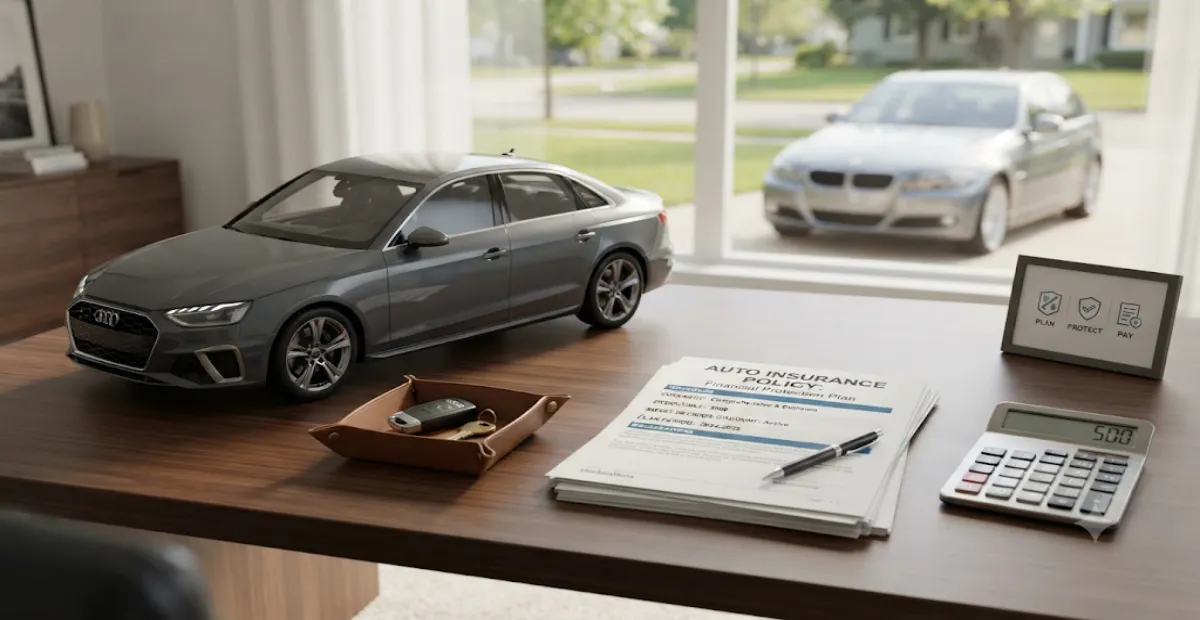
 Understand comprehensive vs collision insurance, their key differences, costs, coverage, and how to choose the right protection for your car.
Collision pays to repair or replace your car after a crash (with a car, a fence, a pole, a pothole or a rollover). Comprehensive pays for non-crash damage and theft: hail, flood, fire, falling trees, vandalism, theft and hitting an animal. Neither is required by law in any state, but a lender or leasing company will almost certainly require both. Neither covers other people’s injuries or property (that’s liability). Both are capped at your car’s current market value, minus your deductible, so on an older, low-value car they can stop being worth the premium.
How to Buy Your First Car Without Overspending in 2026
AWD vs 4WD: Which Is Better for Snow, Off-Road & Everyday Driving?
What Does MPG Mean and How Does It Affect Fuel Costs?
Quick comparison
| Collision | Comprehensive | |
|---|---|---|
| Covers | Damage to your car from a crash | Damage to your car from non-crash events and theft |
| Typical triggers | Hitting a car, tree, fence, guardrail or pole; rolling over; hitting a pothole | Hail, flood, fire, falling objects, vandalism, theft, animal strikes |
| At-fault matters? | Pays whether or not you caused the crash | Fault is not an issue |
| Pays for others’ damage? | No (that is liability) | No |
| Pays for injuries? | No | No |
| Deductible | Yes (you choose) | Yes (set separately) |
| Typical average cost | Higher | Lower |
| Legally required? | No, in any state | No, in any state |
| Required by lender/lessor? | Usually | Usually |
| Payout limit | Car’s current market value minus deductible | Car’s current market value minus deductible |
A simple memory trick:
- Collision = your car collides with something.
- Comprehensive = everything else that can happen to the car (the weather, thieves, animals, falling branches).
What collision covers
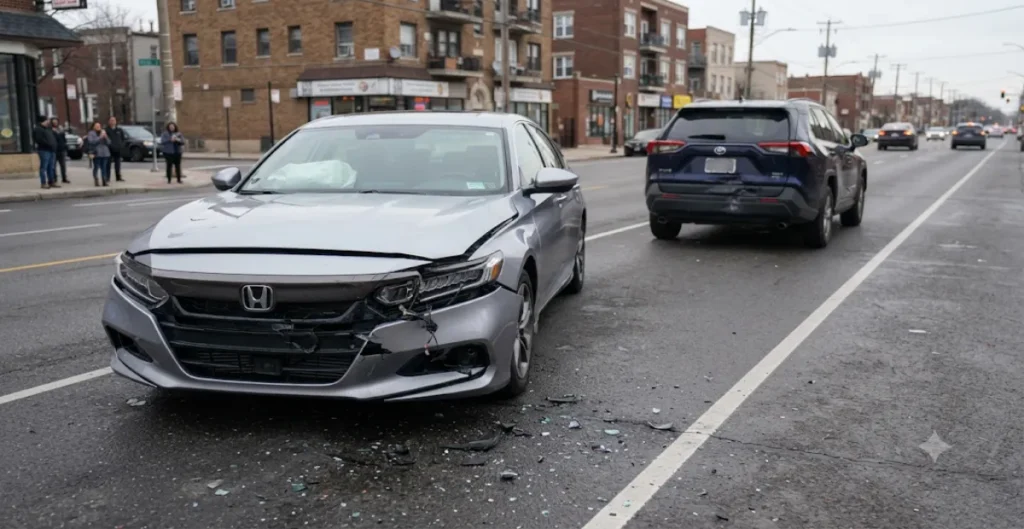 Collision coverage pays to repair or replace your own vehicle after a crash, regardless of who was at fault. It applies when:
- You hit another vehicle.
- You hit a stationary object, such as a tree, fence, guardrail, telephone pole or building.
- Another driver hits you. You can also pursue the other driver’s liability insurance, but your collision coverage lets you get repairs started without waiting for the at-fault party’s insurer.
- Your car rolls over, even without hitting another vehicle.
- You hit a pothole, according to Jerry’s guide.
- It is a hit-and-run where you cannot identify the other driver, according to The Zebra’s list of collision-covered events. (In some states, other coverages such as uninsured-motorist property damage may also apply. Ask your insurer.)
What it pays: the cost to repair your car, or its current market value if it is totaled, minus your deductible.
What it does not do: collision does not pay for other drivers’ vehicles or anyone’s medical bills. Your liability and medical/injury coverages handle those.
What comprehensive covers
Comprehensive pays for damage to your own vehicle from events other than a collision, plus theft. Common examples:
| Category | Examples |
|---|---|
| Weather and natural disasters | Hail, floods, windstorms, hurricanes, tornadoes |
| Fire and explosion | A car fire or garage fire |
| Falling objects | A tree or branch falling on your car |
| Theft | The car stolen and not recovered, or stolen parts |
| Vandalism and riots | Keyed paint, smashed windows |
| Animals | Hitting a deer, bird or other animal |
| Glass | A broken or cracked windshield or other glass from non-collision events |
Windshields: according to Insurify, some states require a $0 deductible for windshield coverage, and in Florida insurers must waive the deductible for windshield replacement when you have comprehensive. Rules differ by state, so check yours.
Why hitting a deer is comprehensive: it counts as a non-collision event under most policies, even though it feels like a crash. Hitting another vehicle or a fixed object is collision. Confirm with your insurer, as policy wording can differ.
Which coverage pays? Real-world scenarios
| Situation | Usually covered by |
|---|---|
| You back into a pole | Collision |
| You rear-end another car | Collision for your car, liability for theirs |
| Someone runs a red light and hits you | Collision (or the at-fault driver’s liability) |
| Your car rolls over | Collision |
| You hit a pothole and damage a wheel | Collision |
| A deer runs into your car | Comprehensive |
| Hail dents the roof and hood | Comprehensive |
| A tree falls on your parked car | Comprehensive |
| Your car is flooded in a storm | Comprehensive |
| Your car is stolen | Comprehensive |
| Someone keys your car or smashes the window | Comprehensive |
| A rock cracks your windshield | Comprehensive (check the glass deductible) |
| Your laptop is stolen from the back seat | Neither. Usually a renters or homeowners claim |
| Your engine fails from age | Neither. A warranty or mechanical breakdown policy |
These are typical outcomes. Your policy wording and state rules decide each case.
What neither covers
Both coverages protect only your own car, and have limits.
- Injuries to you or others. That is medical payments, personal injury protection or liability.
- Other people’s property. Liability covers it.
- Personal belongings stolen from the vehicle. Items inside the car are excluded, but renters or homeowners insurance may cover them.
- Wear and tear, routine maintenance and mechanical breakdown. A manufacturer’s warranty or a mechanical breakdown policy may cover these repairs.
- Amounts above your car’s market value. If your car is totaled, you receive its current value, not the price you paid or what you still owe.
- Your deductible. You always pay it first.
If you owe more than the car is worth, the insurer’s payout may not clear the loan. Gap insurance is designed to cover the difference between the car’s value and what you owe after a total loss or theft, and is worth considering on a new or heavily financed vehicle. Ask your insurer or lender.
Deductibles explained
 A deductible is the amount you pay out of pocket before the insurer pays the rest.
Example (Insurify): $2,000 of hail repairs with a $500 deductible means the insurer pays $1,500.
Key facts
- Comprehensive and collision deductibles are set separately. You can choose a different amount for each.
- Common choices are $250, $500 and $1,000, and many policies go up to $2,000 or $2,500.
- A higher deductible lowers your premium, but you will pay more if you make a claim.
Choosing a deductible
| If you… | Consider |
|---|---|
| Have a solid emergency fund | A higher deductible ($1,000 or more) |
| Have little savings | A lower deductible ($500 or less) |
| Live in a hail, flood or theft-prone area | A level you can pay quickly and comfortably |
| Want the lowest premium | The highest deductible you can afford |
Rule: only choose a deductible that you could pay tomorrow without borrowing.
How much do they cost?
Prices vary by driver, car, location, insurer and deductible. Use these figures as ballparks.
| Source | Figure |
|---|---|
| CarInsurance.com (40-year-old driver, $500 deductibles) | National average collision $687/year, comprehensive $255/year |
| CarInsurance.com, state range | Collision from $402 (Washington) to $1,725 (Michigan). Comprehensive from $101 (Oregon) to $795 (Michigan) |
| Insurify (comprehensive only) | About $202/year with a $1,000 deductible and about $79/year with a $2,000 deductible |
| NerdWallet | Median $196/month for full coverage (comprehensive plus collision) versus $54/month for minimum coverage |
| The Zebra | Comprehensive and collision together make up about half of an average premium. Comprehensive raises a premium by about 10% |
Takeaways
- Collision usually costs more than comprehensive, as the averages above and CBS News (citing Progressive) both indicate.
- Location matters hugely: a hail-prone, high-theft or crowded state can cost several times more.
- Different sources use different driver profiles and dates, so the figures do not match. Treat them as ranges, and get your own quotes.
- NerdWallet’s page shows an October 2024 update date next to figures labeled November 2026, so verify its numbers before quoting them.
Are they required?
| Situation | Required? |
|---|---|
| State law | No, in any state. States require liability coverage, and some require other coverages |
| Car loan | Almost always yes. Lenders typically require both until the loan is paid off |
| Lease | Almost always yes |
| Car owned outright | Optional |
About 75% of US drivers carry these coverages, according to the Insurance Information Institute (cited by CBS News).
If you let a required policy lapse on a financed car, the lender may buy force-placed insurance at your expense. This is generally more expensive and protects the lender, not you. Always ask your lender before dropping coverage.
When to keep or drop them
Once you own the car outright, the choice is yours. Dropping coverage saves premium, but you then pay for any collision or non-crash damage yourself.
Rules of thumb
| Rule | Details (CarInsurance.com) |
|---|---|
| The 10% rule | If the annual premium for the coverage is more than 10% of the car’s actual cash value, consider dropping it |
| Repair-cost test | If repairs would cost about the same as your premiums plus the deductible, or you would replace the car rather than fix it, dropping may make sense |
| Age and value guide | Keep both if the car is under 10 years old, or over 10 years old and worth $3,000 or more |
| Can you afford a loss? | Keep them if you could not afford to repair or replace the car after severe damage or theft |
Reasons to consider dropping
- The vehicle has low market value.
- You have savings to replace the car out of pocket.
- You rarely drive the car, or plan to sell it soon.
Reasons to keep
- You have a loan or lease (required).
- You depend on the car and could not replace it.
- You live in a high-risk area for theft, hail, floods or wildlife.
- You have a long commute or heavy traffic.
- The car is newer or valuable.
Dropping only one
You can sometimes keep one and drop the other. According to CarInsurance.com, collision alone is generally easier to get than comprehensive alone, since insurers prefer to sell the two together. Ask your insurer what it allows.
Example: a 12-year-old sedan worth $2,800, with a $620 annual premium for collision and comprehensive. The premium is over 10% of the car’s value, and the maximum payout would be $2,800 minus the deductible. Dropping coverage is worth considering, if you could absorb the loss.
How claims work
- Make sure everyone is safe, and call emergency services if anyone is hurt.
- Document the damage. Take photos and video, and get a police report for theft, vandalism or major accidents.
- Contact your insurer and file a claim. Tell them which coverage applies.
- An adjuster inspects the car and estimates repair costs.
- You pay the deductible, and the insurer pays the rest to you or the repair shop.
- If the car is totaled, the insurer pays its current market value minus your deductible. If you have a loan, the lender is paid first.
Will a claim raise my rates?
Possibly. Claims can affect your premium, and collision claims, especially at-fault ones, usually raise rates more than comprehensive claims, according to The Zebra’s analysis. The effect depends on your insurer, state and claim history. Not every loss is worth a claim: if the repair costs only a little more than your deductible, paying yourself may be smarter.
Used Electric Cars vs Used Gas Cars: Which Is the Better Deal?
Best Electric Cars for the Money in 2026: Range, Comfort and Value Compared
How to save without losing protection
| Tip | Why it works |
|---|---|
| Raise your deductible | Lower premium, as long as you can afford it |
| Shop around | Prices vary widely between insurers |
| Bundle home and auto | Many insurers discount bundles |
| Ask about discounts | Safe driver, low mileage, anti-theft devices, good student |
| Drive less or garage the car | Lower theft and weather exposure |
| Review yearly | Car value falls each year, and so should your coverage decisions |
| Keep a clean record | Fewer claims and violations mean lower rates |
| Consider a telematics program | Safe driving can earn a discount (privacy trade-offs apply) |
Common mistakes
- Assuming comprehensive means “covers everything.” It does not cover collisions, injuries, belongings or breakdowns.
- Confusing a deer strike with a collision. It is usually comprehensive, so check your policy.
- Choosing a deductible you can’t afford.
- Dropping coverage on a financed car without your lender’s approval.
- Keeping full coverage on a very old, low-value car when premiums exceed what a claim could pay.
- Forgetting gap coverage when you owe more than the car is worth.
- Expecting a payout based on what you paid, not the car’s current market value.
- Leaving valuables in the car and expecting auto insurance to replace them.
- Filing small claims that raise your rates more than they pay.
- Not reading the policy or asking your agent about glass, rental and roadside coverage.
FAQ
What is the difference between comprehensive and collision insurance? Collision pays for damage to your own car from a crash, such as hitting another vehicle or an object. Comprehensive pays for non-crash events and theft, such as hail, flood, fire, falling objects, vandalism and animal strikes.
Is hitting a deer collision or comprehensive? It is typically treated as a comprehensive claim because an animal strike is a non-collision event. Check your policy wording.
Do I need both comprehensive and collision? Neither is required by law, but lenders and lessors usually require both. If you own your car outright, you can decide based on its value and your ability to absorb a loss.
Does collision cover me if I’m not at fault? Yes. It pays for damage to your car regardless of fault, and you can also pursue the at-fault driver’s liability insurance.
Does comprehensive cover a cracked windshield? Usually yes, for non-collision causes. Some states require a $0 glass deductible, and Florida insurers must waive the deductible for windshield replacement.
Does comprehensive cover items stolen from my car? No. Personal belongings are excluded from comprehensive. Renters or homeowners insurance may cover them.
Which costs more, collision or comprehensive? Collision usually costs more. CarInsurance.com’s national averages are about $687 a year for collision and $255 for comprehensive, using $500 deductibles for a 40-year-old driver.
When should I drop collision and comprehensive? A common rule of thumb is when the annual premium exceeds about 10% of the car’s value, or when you could easily replace the car out of pocket. Never drop them on a financed or leased car without your lender’s approval.
Do these coverages pay more than my car is worth? No. Payouts are capped at the car’s current market value minus your deductible. Gap insurance may cover the difference between value and loan balance.
Do they cover other people’s cars or injuries? No. Liability and injury coverages handle damage to others.
Conclusion
The difference comes down to what hit your car. If a crash damaged it, collision pays. If weather, theft, vandalism, fire, a falling object or an animal did, comprehensive pays. Both protect only your car, both are limited by its market value and your deductible, and both are usually mandatory while you owe money on the car. Pick deductibles you can afford, check the 10% rule on older cars, and compare quotes each year.
12 Rare Classic Motorcycles That Became Valuable Collector’s Treasures
🔹🔹 Follow us on facebook 🔹🔹