
What Separates True Automotive Legends From Merely Great Cars
Plenty of vehicles are fast, beautiful or well engineered. Very few become automotive legends, and the ones that do usually share something that has little to do with a spec sheet: they changed who could own a vehicle, how it was built, or what people expected from the next one. A Ford Model T, a Maruti 800 and a Honda Super Cub are not the quickest machines of their eras. They are legends because millions of ordinary people used them and organised their lives around them.
This article looks at nine cars and motorcycles that earned that status, with an Indian lens. Some, like the Hindustan Ambassador, the Maruti 800, the Royal Enfield Bullet and the Bajaj Chetak, shaped Indian roads directly. Others, such as the Model T, the Beetle, the Mini, the Porsche 911 and the Super Cub, shaped them indirectly. Facts come from the manufacturer and press sources listed at the end, and I have flagged the few places where a figure is implied rather than stated. Historical dollar figures are US prices of the time and are not converted into rupees.
What Separates True Automotive Legends From Merely Great Cars
It helps to define the term before ranking anything. Looking across the nine vehicles here, four things keep recurring.
Reach. The vehicle put mobility within reach of people who had gone without it. The Model T, the Beetle, the Maruti 800 and the Super Cub all did this.
Longevity. A long production run builds familiarity. The Royal Enfield Bullet, the Porsche 911 and the Ambassador each stayed in production for decades, so several generations grew up around them.
Design that others copied. Alec Issigonis’s compact front-wheel-drive packaging for the Mini and the Super Cub’s step-through layout were solutions other makers chased.
Emotional ownership. A legend is rarely replaced by a better product alone. People keep the old one, repair it, and talk about it. The Chetak’s years-long waiting lists are the clearest example.
Not every legend meets all four tests, and that is useful: it shows there is more than one route to the top.
Motorcycles for Every Kind of Rider: How to Choose a Motorcycle That Actually Fits
The Cars That Changed How the World Moved
Ford Model T (1908 to 1927)
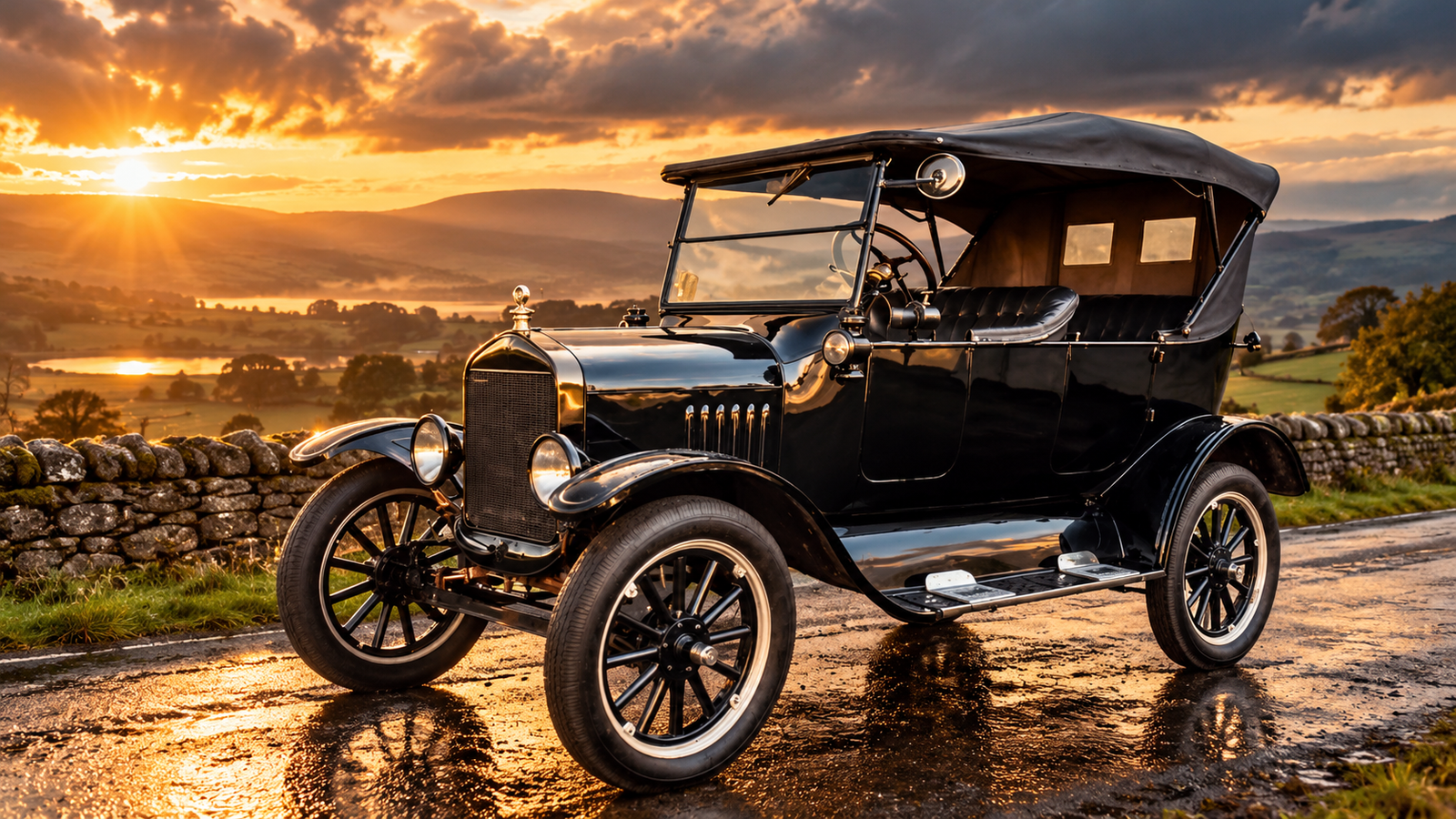
The Model T matters less for what it was than for how it was made. Ford built more than 15 million of them between 1908 and 1927. In 1913, at Highland Park, Ford introduced the moving assembly line, and the time to build a car fell from about 12.5 hours to one finished Model T every 93 minutes, according to the Henry Ford museum’s research guide. Over the production run the price dropped from $850 to as low as $260.
The lesson here is that price and process are connected. A cheap car became possible because the factory changed first. Every volume car maker that followed, including the ones that built the Ambassador and the Maruti 800, worked in that tradition.
Volkswagen Beetle (Type 1)
The Beetle’s layout was unusual: rear-mounted engine, simple mechanicals, a shape that barely changed. Hagerty reports that more than 21 million original Beetles were built, with Mexican production at the Puebla plant continuing until 2003. Volkswagen revived the nameplate with the front-wheel-drive New Beetle in 1998, based on the Golf, and that version also ended in 2019, when the last car went to a museum in Puebla.
What made the Beetle a legend was a refusal to chase fashion. The same basic shape stayed on sale for decades, which let owners, mechanics and parts suppliers build an entire ecosystem around it.
Mini (1959)
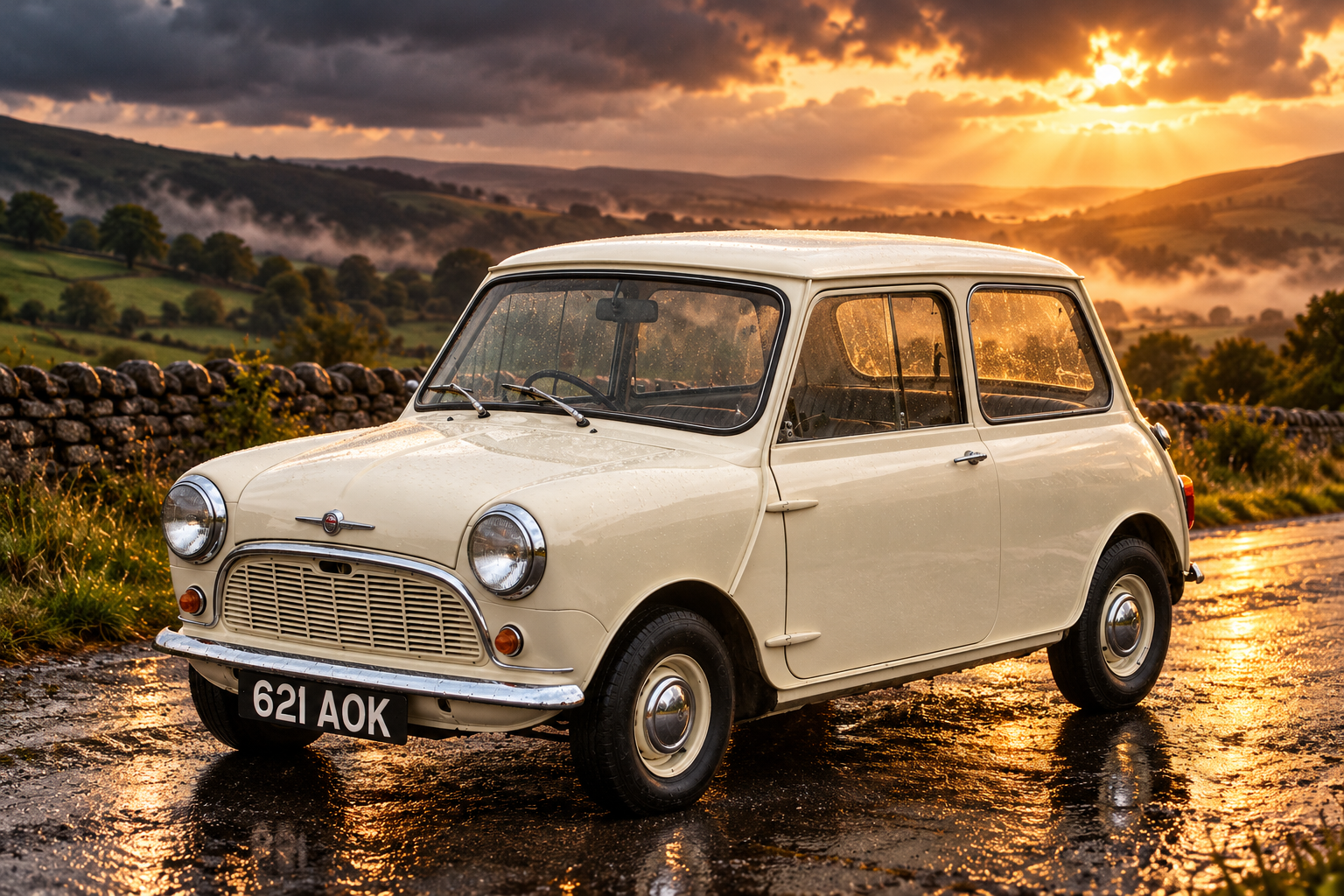
The Mini arrived in 1959 as the Austin Seven and the Morris Mini Minor, designed by Alec Issigonis. BMW’s press timeline records its Monte Carlo Rally success: wins in 1964 (Paddy Hopkirk) and 1965 (Timo Mäkinen), then a 1966 result that was disputed over lighting regulations, and an official victory in 1967. It also tracks the production milestones, with the millionth car built in 1965 and the five millionth in 1986.
The Mini is a reminder that a small, cheap car does not have to feel like a compromise. Its rally record showed that a compact car could be fun to drive, and that idea echoes in modern small hatchbacks. The Mini’s compact front-wheel-drive layout, with the engine mounted sideways, left more of the footprint for people and luggage; that packaging approach became standard across small cars.
Porsche 911 (1963)
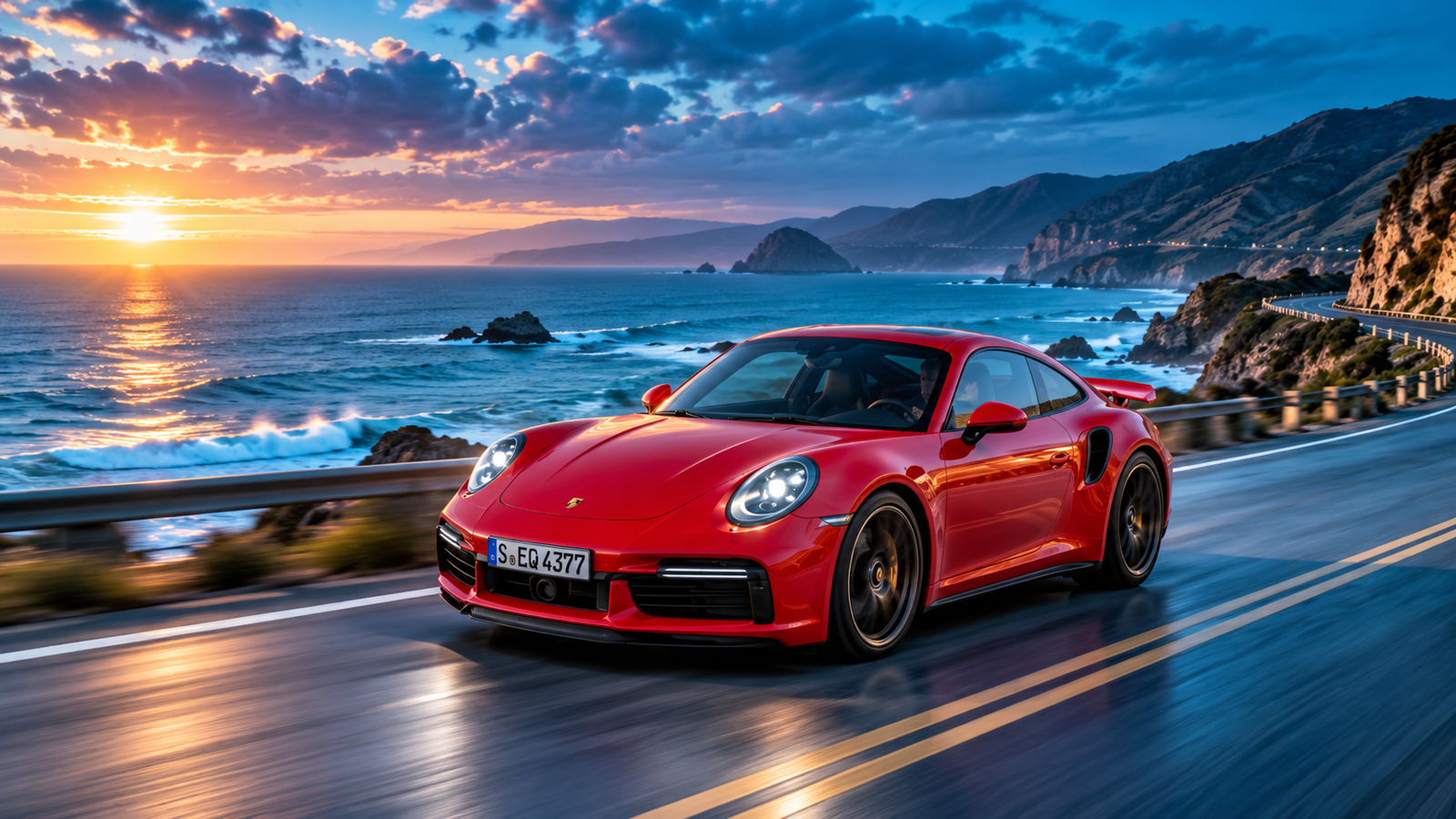
Porsche showed the car as the 901 at the 1963 Frankfurt show and renamed it the 911 for its 1964 market launch. The original used a 2.0-litre air-cooled flat-six making 130 hp, mounted at the rear. Porsche’s own history lists seven generations, from the original through the G series, 964, 993, 996, 997 and 991. The 996 in 1997 was the first with a water-cooled engine, ending a very long air-cooled run. The 911 reached one million cars in 2017.
The 911 is the rare legend built on stubbornness. Porsche kept the rear-engine flat-six idea and refined it for decades, often against sensible engineering arguments. That consistency created a recognisable object that buyers could follow from one generation to the next.
The Indian Legends That Built a Country’s Roads
Hindustan Ambassador (about 1958 to 2014)
The Ambassador was a version of the third-generation Morris Oxford that Hindustan Motors built and renamed. Top Gear reported in 2014 that production had ended after about 56 years, which places the start around 1958. Sales had collapsed to roughly 2,200 cars in the previous year, and the company’s losses exceeded its worth.
Its decline had two causes. The Maruti 800 arrived in the 1980s with modern technology, and India opened its market to global manufacturers in the 1990s. The Ambassador’s survival for so long, with the same basic body, is what made it a legend: it was the car of taxis, officialdom and a generation of Indian families.
Maruti 800 (1983 to 2014)
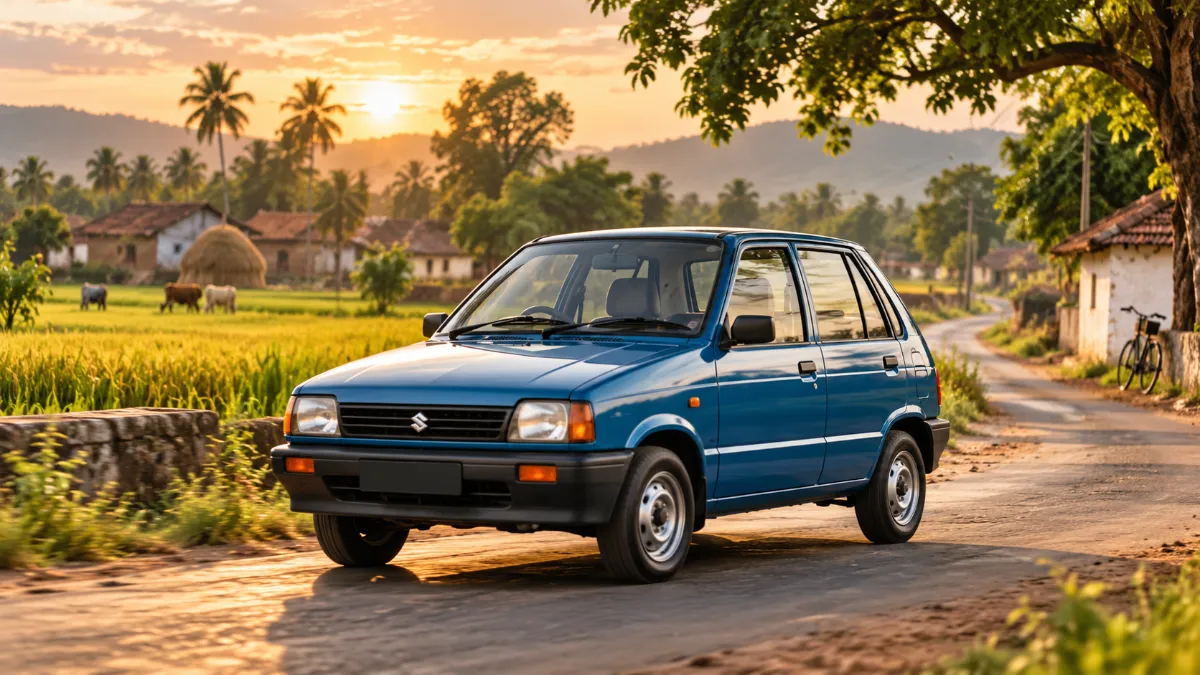
The Maruti 800 reached its first customer on 14 December 1983. Harpal Singh won that first car in a lucky draw, and The Week notes that it is displayed at Maruti Suzuki’s South Delhi headquarters. Production ended on 18 January 2014, after about 29.2 lakh units, of which 26.8 lakh were sold in India and 2.4 lakh exported.
The 800 broke the dominance of the Ambassador and the Premier Padmini, turned car ownership into a middle-class aspiration and made Maruti a major company. It is a good example of how a legend can be an ordinary car that arrived at the right moment, with the right price and a reliability record people trusted.
Royal Enfield Bullet (1932 to today)
The Bullet was launched in 1932 as a single-cylinder four-stroke with overhead valves and exposed valve gear. Curbside Classic traces the Indian chapter: Royal Enfield exported to India from 1949, the Indian government chose the Bullet 350 in 1955, kits were assembled in Madras, and by 1962 the motorcycle was made entirely in India. The same source says the Bullet holds the honour of being the longest continuous nameplate in production since 1932. Today’s Bullet 350 uses a 349 cc single-overhead-cam engine.
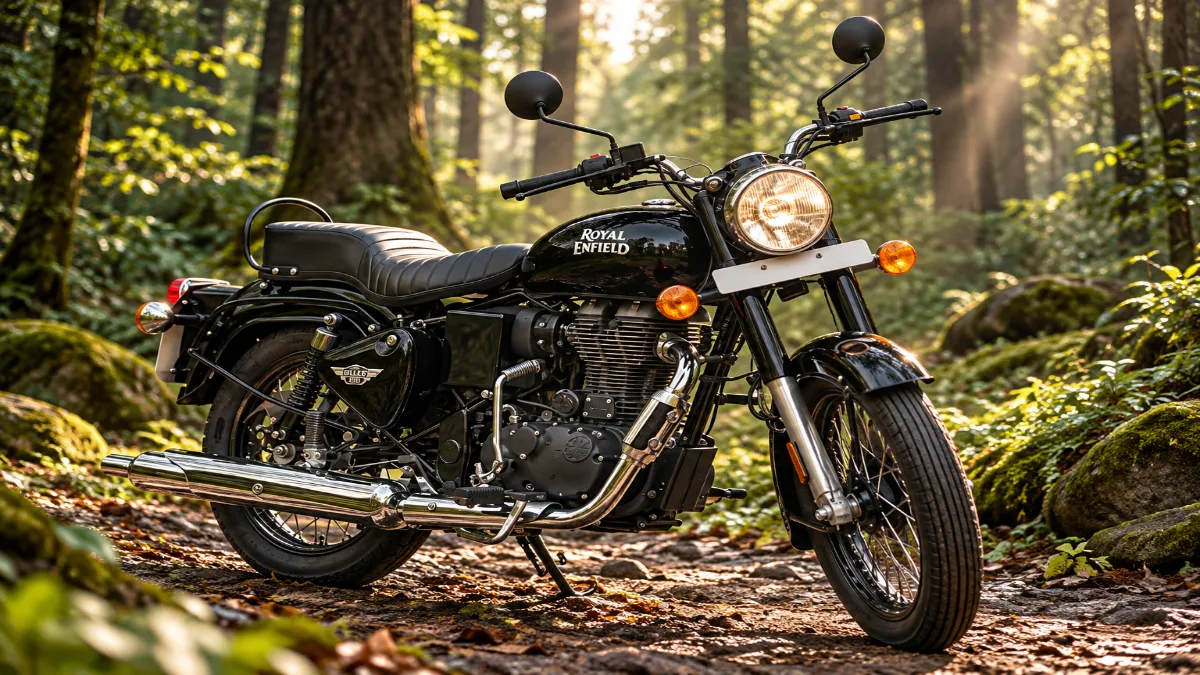
The Bullet’s legend is built on continuity. The thump of a single-cylinder engine, the upright riding position and the repairability make it a motorcycle that owners recognise across generations. It also shows why seemingly outdated machinery can survive: a simple design is something a village mechanic can fix.
Bajaj Chetak (1972 to the mid-2000s)
Bajaj launched the Chetak in 1972, based on Vespa’s Sprint under a technical partnership. Autocar India reports that the name came from the horse of Maharana Pratap, and that the “Hamara Bajaj” advertising line captured the scooter’s popularity. Demand was so strong that buyers reportedly waited up to ten years, and used scooters sold for close to double their showroom price. By 1990 Bajaj advertised “no waiting,” and the Chetak still made up about half of its scooter sales. The same report says it was phased out 33 years after launch, which points to roughly 2005 although it does not give the year directly. Bajaj later brought the name back on an electric scooter, with bookings reported to open in January 2020.
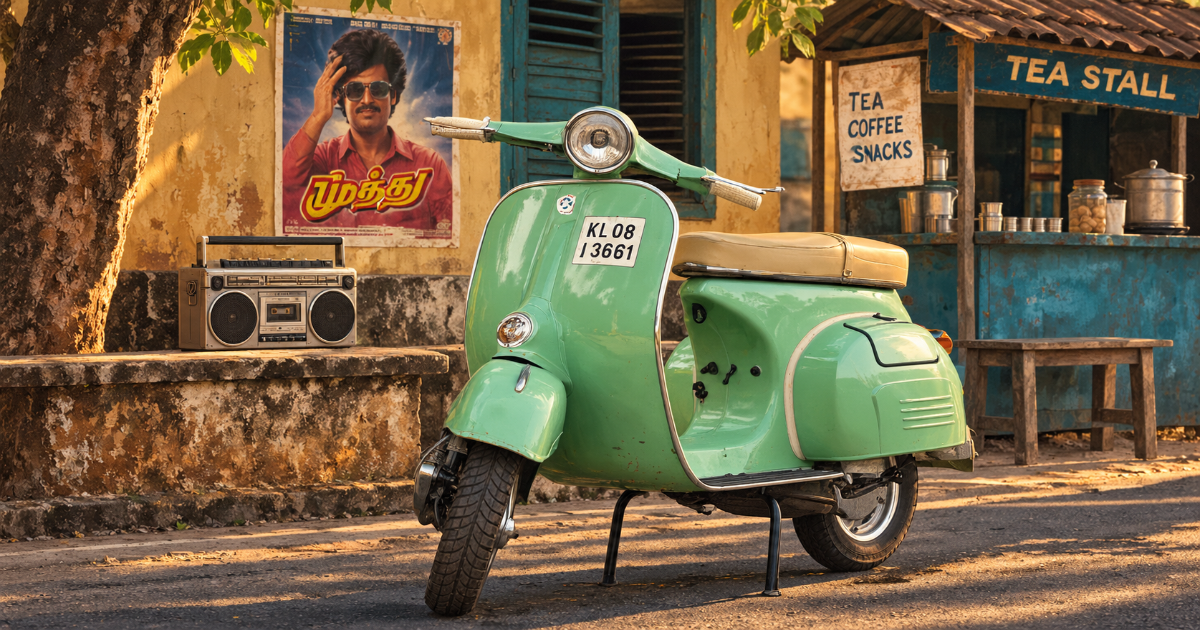
The Chetak shows how a legend can survive its own discontinuation. The brand name was valuable enough to revive for a completely different technology.
Why the Honda Super Cub Belongs Among Automotive Legends
Honda’s Super Cub is arguably the most important vehicle on this list, and it did not need to be a car. Sales of the first C100 began in August 1958. Honda reached 100 million cumulative Super Cub units in October 2017, with production at 16 plants in 15 countries.
The engineering choices explain the success. The 50 cc four-stroke engine was unusual in a market full of two-strokes. A low-floor backbone frame made it easy to step through, a centrifugal clutch removed the need for a manual clutch, and a large leg shield kept riders cleaner. None of that is glamorous, but together it created a vehicle that a person who had never ridden a motorcycle could use on day one. That combination of low barriers and durability is why the Cub shaped motorcycling in much of Asia, including the commuter bike segment that dominates India today.
Common Misconceptions About Automotive Legends
- “A legend has to be fast or expensive.” Of the nine here, only the Porsche 911 is a performance car. The rest earned their place through reach, durability and cultural presence.
- “Legends never change.” Even the most consistent examples evolved. The 911 moved from air to water cooling in 1997, and the Bullet’s modern engine is a very different design from the 1932 original.
- “Production length alone makes a legend.” The Ambassador ran for decades, yet its decline shows that staying power must be paired with competitive relevance.
- “Legends are always remembered fondly.” Many were also frustrating: slow, thirsty or hard to buy. Chetak buyers waited years. That did not damage the legend; it deepened it.
Automotive Legends Compared: Which One to Study First
| If you are interested in… | Start with | Why |
|---|---|---|
| How cheap cars became possible | Ford Model T | The assembly line cut build time to 93 minutes per car |
| Small-car design | Mini | Compact packaging and rally success |
| Long-running engineering identity | Porsche 911 | Seven generations on one basic idea |
| India’s car story | Ambassador and Maruti 800 | Two eras of Indian motoring |
| India’s two-wheeler story | Bullet, Chetak, Super Cub | Three different routes to the same loyalty |
Conclusion
The nine machines above did not become automotive legends because they won every comparison test. They became legends because they fit a moment, stayed around long enough to become familiar, and left something behind: a production method, a design idea, a brand name or a habit of ownership. If you want to learn what makes a vehicle matter beyond its numbers, start with the ones that people still talk about long after their last showroom day.
Frequently Asked Questions
What makes a car or motorcycle an automotive legend?
There is no single formula, but the same traits keep appearing: mass reach, long production, influential design and strong emotional ownership. Most legends have at least two of these, and many have all four.
Which Indian vehicles are considered automotive legends?
The Hindustan Ambassador, Maruti 800, Royal Enfield Bullet and Bajaj Chetak are among the most often cited. The Maruti 800 is notable because it ended in 2014 after about 29.2 lakh units, and the Ambassador’s production also ended in 2014 after about 56 years.
Is the Royal Enfield Bullet really the longest-produced motorcycle?
Curbside Classic describes it as the longest continuous nameplate in production since 1932. Claims like this depend on how “continuous” is defined, so treat it as a widely repeated claim and not an official ranking.
Why is the Honda Super Cub so important?
It was designed to be easy to ride, with a step-through frame, a clutch that needs no hand operation and a reliable four-stroke engine. Honda reached 100 million units in October 2017.
Did the Volkswagen Beetle really stay in production for decades?
The original Type 1 was built in more than 21 million units, with production in Mexico running until 2003. The newer front-wheel-drive Beetle that began in 1998 also ended later, in 2019.