
The market-trends heading now reads “What the New Cars to Watch in 2026 Tell Us About the Market”
If you only have time to track a handful of launches this year, the new cars to watch in 2026 are the ones that change what an Indian buyer can get for the money. That list starts with the Tata Sierra EV, Maruti Suzuki’s first electric car (the e Vitara), Mahindra’s three-row XEV 9S, the returning Renault Duster with its hybrid still to come, and Hyundai’s Bayon, which has not been launched yet. Each one pushes on a different pressure point: electric pricing, family space, midsize-SUV value, or hybrid efficiency.
This guide is written for the Indian market, so prices are ex-showroom in rupees and ranges are in kilometres. Facts come from launch reporting available as of 9 October 2026. Where sources disagree, the article says so, and anything not yet launched is labelled as expected rather than confirmed. Nothing here comes from personal road tests; the analysis is based on published specifications and pricing.
How These Cars Were Chosen
Importance is not the same as sales volume or horsepower. A car makes this list when it does at least one of three things: it brings a new technology to a lower price band, it reopens a segment that was neglected, or it forces rivals to respond. The midsize-SUV segment is the busiest in the country, and 2026 has been described as a midsize-SUV year, with the Duster’s comeback and Maruti’s first EV arriving within weeks of each other. Electric cars dominate this list because that is where pricing and ownership models are changing fastest.
The New Cars to Watch in 2026: Seven That Matter Most
1. Tata Sierra EV
Tata revived the Sierra name with a petrol-powered SUV launched on 25 November 2025 at a starting price of ₹11.49 lakh. The electric version followed at the end of June 2026, starting at ₹18.79 lakh. Top-end prices are reported at roughly ₹26 lakh, though outlets quote slightly different figures (₹25.99 lakh to ₹26.48 lakh), so confirm with a dealer.
The Sierra EV sits between the Curvv EV and the Harrier EV and shares its Acti.ev+ architecture with the Harrier EV. Two battery packs are offered: 63 kWh and 75 kWh. Rear-wheel drive is standard, and all-wheel drive is limited to the top variant with the larger pack. Tata’s claimed MIDC ranges are 665 km for the 75 kWh rear-drive versions, 624 km for the all-wheel-drive variant and roughly 535 to 566 km for the 63 kWh version, depending on which publication you read. MIDC is a lab cycle, so real-world range will be lower, especially at highway speeds.
Charging is a genuine strength on paper: a 120 kW DC charger is claimed to take the battery from 20 to 80 percent in about 26 minutes, or add up to 263 km in 15 minutes. Tata also claims a 0–100 km/h time of 5.8 seconds, and ground clearance is 205 mm. The battery carries a “lifetime” warranty that, in practice, means 15 years from first registration.
Why it matters: the Sierra EV is the first electric SUV from a mainstream brand to combine a nostalgic nameplate, a long claimed range and an AWD option without a luxury price tag. The trade-off is that the best range sits in the pricier 75 kWh versions, so the headline ₹18.79 lakh figure and the 665 km figure do not belong to the same car.
2. Maruti Suzuki e Vitara
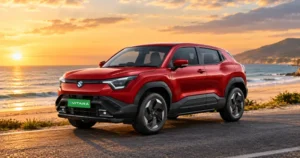
Launched on 17 February 2026, the e Vitara is Maruti Suzuki’s first mass-market electric vehicle and sits on the HEARTECT-e platform. It comes with a 49 kWh pack (144 PS, claimed ARAI range 440 km) or a 61 kWh pack (174 PS, 543 km). Both use LFP chemistry, both are front-wheel drive, and torque is 193 Nm. At 4,275 mm long with a 2,700 mm wheelbase, it is compact for the segment.
The interesting part is the price structure. Maruti advertised an introductory ₹10.99 lakh for the Delta variant under a Battery-as-a-Service (BaaS) plan, where you buy the car without the battery and pay ₹3.99 for every kilometre driven. One report puts outright prices including the battery at ₹15.99 lakh for Delta, ₹17.49 lakh for Zeta and ₹19.79 lakh for Alpha.
Here is the practical maths. The gap between BaaS and outright Delta pricing is about ₹5 lakh. At ₹3.99 per km, you would need to drive roughly 125,000 km before the rental charge equals that gap. At 60 km a day (about 21,900 km a year) that takes nearly six years; at 12,000 km a year, more than ten. This ignores electricity, financing costs and resale value, but it shows BaaS is a lower-entry-cost option for light users rather than a bargain for heavy ones. Maruti also bundles a home charger installation worth ₹50,000 and an assured-buyback offer, though early reports differed on the battery warranty length, so read the final terms.
Why it matters: Maruti sells more cars in India than anyone. If it can make EV ownership feel ordinary, the whole segment benefits.
3. Mahindra XEV 9S
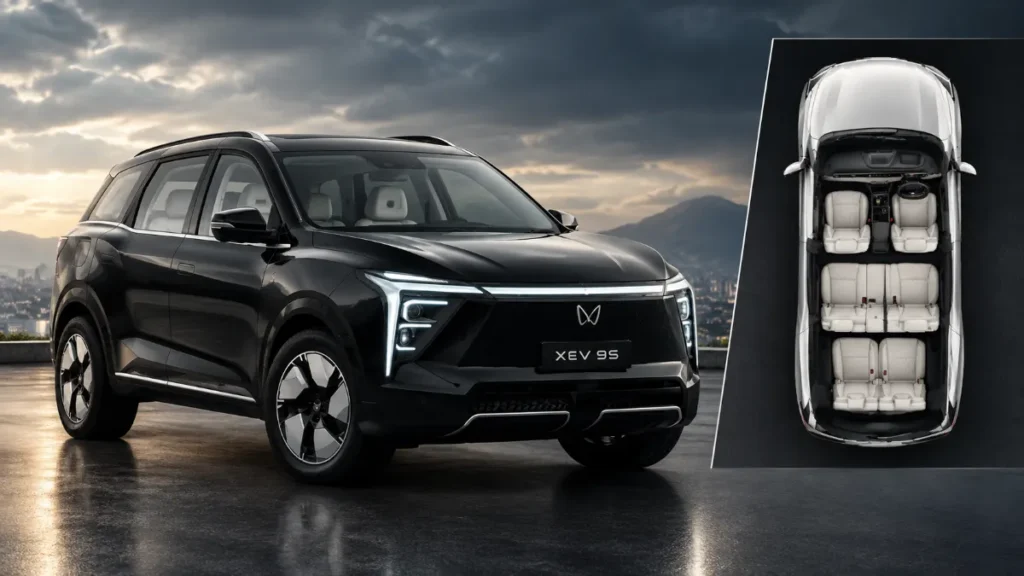
Mahindra’s XEV 9S launched on 27 November 2025, with deliveries starting on 23 January 2026. It is the brand’s first three-row electric SUV, priced from ₹19.95 lakh to ₹29.45 lakh depending on pack and feature level. It uses the INGLO platform shared with the BE 6 and XEV 9e and offers 59 kWh, 70 kWh and 79 kWh batteries with ARAI-claimed ranges of 521 km, 600 km and 679 km respectively.
A single rear-mounted motor makes up to 286 PS and 380 Nm, with 0–100 km/h in roughly seven seconds. The XEV 9S measures 4,737 mm in length with a 2,762 mm wheelbase and 219 mm of ground clearance. The cabin uses three 12.3-inch screens, and the 79 kWh version can fast-charge from 20 to 80 percent in about 20 minutes at up to 180 kW, according to Autocar India.
At launch, reports described it as having no direct rival in the mass-market three-row EV category. Options such as the Kia Carens Clavis EV and BYD eMax 7 were mentioned as cheaper alternatives, and the Tata Harrier EV and Toyota Innova Hycross hybrid as other choices for large families.
Why it matters: a seven-seater EV with usable range changes the argument for families who have defaulted to diesel MPVs. The caveat is that the feature packs can push the price close to ₹30 lakh.
4. Renault Duster: The Comeback With a Hybrid Still to Come
Renault brought back the Duster for India on 17 March 2026, four years after the old one was discontinued. The third-generation model starts at ₹10.49 lakh (₹10.29 lakh for early R-Pass bookers), and the range tops out at about ₹18.49 lakh. Deliveries of the petrol versions began in April.
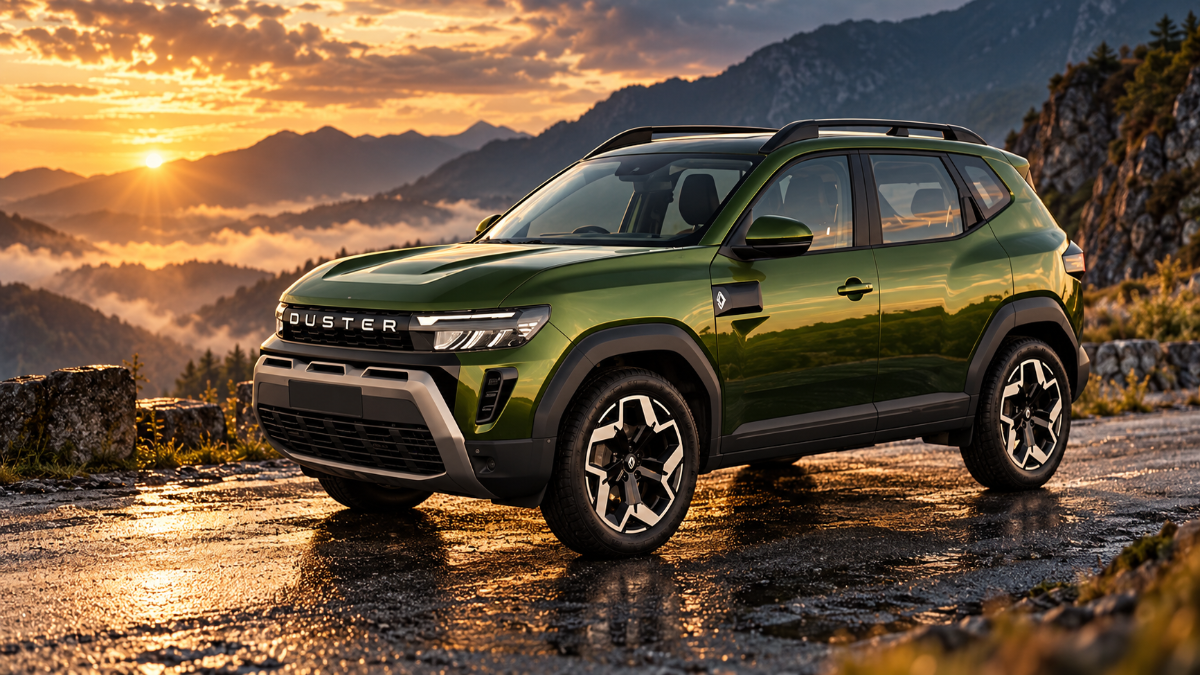
Three powertrains are on the menu. A 1.0-litre turbo-petrol makes about 100 PS and comes with a manual gearbox. A 1.3-litre turbo-petrol makes 163 PS and 280 Nm with a six-speed manual or a six-speed dual-clutch automatic. The third is a 1.8-litre strong hybrid pairing a 109 hp petrol engine with a 49 hp electric motor, a 20 hp starter generator and a 1.4 kWh battery, for roughly 160 hp combined. Renault says the hybrid can run in electric mode for up to 80 percent of city driving, which is a manufacturer claim, not an independent test.
Renault reported that 91 percent of pre-bookers chose the 1.3-litre turbo and 39 percent of metro bookers were interested in the hybrid. Hybrid pricing had not been announced in the reports consulted; Renault says it will arrive around Diwali, and at least one outlet lists 17 October as the date. The Duster is also the first Renault in India with Level 2 ADAS.
Why it matters: the hybrid is the interesting one. It targets the Grand Vitara and Hyryder strong hybrids, which have had that corner largely to themselves.
5. Hyundai Bayon: Expected, Not Yet Here
Hyundai has confirmed a new SUV called the Bayon for India, slotting between the Venue and the Creta at roughly 4.2 metres in length. Pricing is not official. Estimates range from ₹9 lakh to ₹15 lakh, and engine details are also unconfirmed. Many reports expect Hyundai’s 1.5-litre naturally aspirated petrol (about 115 PS) with a factory CNG option, which would be a first for a Hyundai SUV above four metres, while others mention a new 1.2-litre turbo. Launch reports point to the festive season, with a global debut on 12 October.
If the early expectations hold, the Bayon would compete with the Victoris, Kushaq, Taigun and Hyryder. Treat everything here as provisional until Hyundai publishes variants and prices.
6. Other Launches Worth Tracking
- Kia Syros EV was launched on 22 July 2026 on the K1 BEV platform, a smaller electric crossover from Kia.
- New-generation Audi Q3 is scheduled for 16 October, with local production already under way and a 204 hp petrol with Quattro all-wheel drive.
- Volvo EX90 and ES90 are slated for 12 October.
- Hyundai Venue (new generation) is listed from ₹7.90 lakh, making it among the cheapest of the year’s launches.
What the 2026 Launches Tell Us
Electric pricing is splitting in two. Maruti’s BaaS model and Tata’s range-led approach show two different answers to the same problem: the upfront price of an EV. Buyers who drive little may prefer BaaS; those who drive a lot will probably be better off buying the battery.
Hybrids are the practical middle. Renault’s Duster hybrid, plus Hyundai’s CNG-leaning Bayon, show that carmakers expect many buyers to skip full EVs while still wanting better fuel economy.
Midsize SUVs are crowded. The Sierra, Duster, Victoris and Creta all fight in the same space, and the segment rewards features, safety equipment and engine choice more than raw price.
Common Mistakes When Buying a Newly Launched Car
- Treating claimed range as real range. MIDC and ARAI figures are lab numbers. Plan for less, especially on highways.
- Comparing the headline price with the top variant. The ₹18.79 lakh Sierra EV and the 665 km Sierra EV are different cars. The same applies to the e Vitara’s BaaS price.
- Ignoring ex-showroom versus on-road. Insurance, registration and accessories add to the bill.
- Waiting forever for the next launch. Facelifts and new models appear constantly. Buy when a car fits your needs, not because something newer is rumoured.
- Trusting expected prices. Anything listed as “expected” can change at launch.
Quick Comparison
| Car | Status (as of 9 Oct 2026) | Starting price (ex-showroom) | Claimed range or engine |
|---|---|---|---|
| Tata Sierra EV | Launched, June 2026 | ₹18.79 lakh | Up to 665 km (MIDC) |
| Maruti Suzuki e Vitara | Launched, Feb 2026 | ₹10.99 lakh (BaaS); outright reported from ₹15.99 lakh | 440 to 543 km (ARAI) |
| Mahindra XEV 9S | Launched, Nov 2025 | ₹19.95 lakh | 521 to 679 km (ARAI) |
| Renault Duster | Launched, Mar 2026 (hybrid pending) | ₹10.49 lakh | 1.0 and 1.3 turbo petrol; 1.8 hybrid to come |
| Hyundai Bayon | Not launched | Expected ₹9 to 15 lakh | Reportedly 1.5 petrol, CNG |
Conclusion
The new cars to watch in 2026 share one theme: they make a once-premium choice more accessible. The Sierra EV makes long range and AWD feel mainstream, the e Vitara tests whether Maruti’s reach can normalise EVs, the XEV 9S gives large families an electric option, and the Duster hybrid and Bayon could reshape the midsize-SUV pecking order. Before you spend, verify prices, variants and warranty terms directly with a dealer, because several of these details have shifted since launch.
Frequently Asked Questions
Which new car launched in 2026 has the longest claimed range in India? Among the cars covered here, the Mahindra XEV 9S with the 79 kWh pack claims 679 km (ARAI), and the Tata Sierra EV claims up to 665 km (MIDC). The two use different test cycles, so they are not directly comparable.
Is the Maruti e Vitara really available for ₹10.99 lakh? Only under the Battery-as-a-Service plan, where the battery is rented at ₹3.99 per km. One report lists outright prices with the battery from ₹15.99 lakh. Confirm current pricing with a Nexa dealer.
Has the Hyundai Bayon launched in India? Not as of 9 October 2026. Hyundai has confirmed the name and the positioning, but the price, engines and launch date should be treated as expected.
Does the new Renault Duster come as a hybrid? The hybrid was announced with the launch but arrives later. Renault has said it will come around Diwali 2026, and its price was not announced in the reports reviewed.
Are these cars worth waiting for? The Sierra EV, e Vitara, XEV 9S and Duster petrol models are already on sale, so there is nothing to wait for if one fits your budget. Wait only if the Duster hybrid or Bayon is your target.
2 Responses