
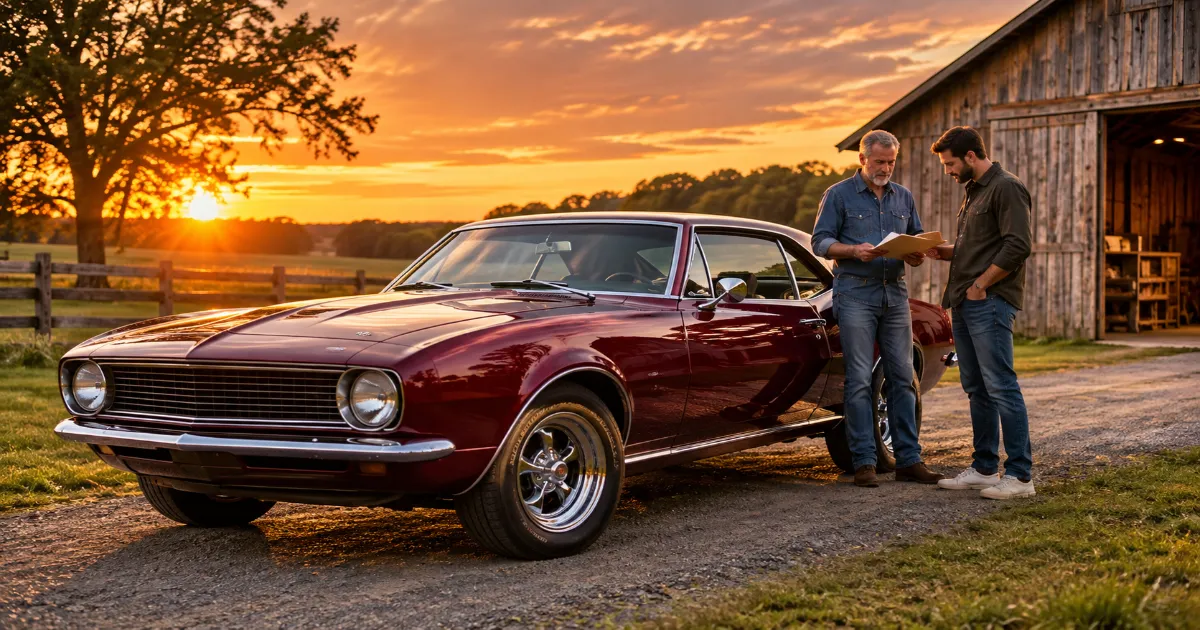
 From Facebook Marketplace to club newsletters, here is where private sellers list, which red flags regulators warn about and how to verify titles for classic cars for sale by owner.
Dealers and big online auctions get most of the attention, but many collectors still prefer to buy straight from the person who has owned and driven the car. A private seller can tell you how it was stored, what has been replaced and why it is for sale, and there is no dealer markup between you and the keys. That is the appeal of classic cars for sale by owner, and it is also where the risk is highest, because a private sale usually comes with no warranty, no return policy and no one to complain to if something is wrong.
The risk is not theoretical. In September 2026 the Federal Trade Commission warned that scammers are using artificial intelligence to clone real dealership websites, and consumer groups have long reported fake listings, fake escrow companies and cloned VINs. This guide covers where to look online and offline, how to vet a listing and a seller, how to check the VIN and title, how to inspect the car and pay safely, and what to do before you drive away. Information was checked against federal consumer alerts, state agency guidance and trade reporting as of November 19, 2026, and the text separates sourced facts from editorial advice.
Vintage Cars vs Classic Cars: 4 Crucial Differences You Should Know
Future of Mobility: 7 Technologies That Could Change How We Travel
Why Buy From an Owner, and What You Give Up
Buying from an owner has three real advantages. You can ask about history and get a first-hand answer. Prices are negotiable without dealer overhead. And the best-kept cars often never reach a dealer at all, because they trade between enthusiasts.
The trade-off is protection. The FTC’s Used Car Rule, which requires window-sticker disclosures, generally applies to dealers rather than private individuals, so a private sale is typically “as is” unless the seller gives a written promise. Problems with title, liens or undisclosed damage are yours to find before the sale, not after it. Everything below is built around finding them first.
Where to Look Online
No single site covers the market, and the platforms differ in who sells, how the sale works and what it costs. The table summarizes the main options for private-party classic cars. Fees were reported in October 2026 by a classic-car shipping blog and change often, so confirm before you bid.
| Platform | Format | Who sells | Cost notes |
|---|---|---|---|
| Facebook Marketplace | Local classifieds | Almost entirely private individuals | Free to browse; treat every listing as unverified |
| Craigslist | Local classifieds | Private sellers and some dealers | Good for project cars and barn finds; high scam volume |
| eBay Motors | Auction or “Buy It Now” | Private sellers and dealers | Listing fees reported at $34 or $79; no buyer’s fee |
| Hemmings | Classifieds and auctions | Private sellers and dealers | Auction seller fee reported near $100; buyer’s fee 5% on auctions |
| ClassicCars.com | Classifieds | Private sellers, dealers and consignors | Very large volume, including some modern cars |
| Autotrader Classics | Classifieds | Sellers nationwide | Broad filters; no way to buy directly through the site |
| Bring a Trailer | Curated online auction | Private sellers and dealers | Seller fee about $99; buyer’s fee 5% with a minimum of $250 |
| Cars & Bids | Online auction | Private sellers and dealers | No seller fee reported; buyer’s fee 5%; U.S. and Canada cars |
Two cautions apply. The buyer’s-fee cap on auction sites has changed over time: one October 2026 summary lists $7,500 for Bring a Trailer and Cars & Bids, while older guides cite $5,000, so check the current terms. On a $40,000 car, a 5 percent fee is $2,000 on top of the winning bid. And aggregators such as AutoTempest can pull listings from several sites into one search, which saves time, though you still have to vet each seller.
Where to Look Offline
Some of the best cars never appear on a major site. Insurer Progressive suggests starting with local newspapers’ classified ads, classic-car publications and car clubs, as well as Facebook Marketplace and Craigslist. Clubs are especially useful: marque and model clubs publish newsletters with member classifieds, and members tend to know which cars are honest and which have problems.
Other offline sources include cruise-ins and car shows, where owners often leave “For Sale” signs on windshields, swap meets and estate sales. These sources reward patience and local knowledge. They also let you see the car and meet the owner before any money is discussed, which removes the biggest online risk.
Search Smarter
Use specific terms: year, make and model, plus words owners commonly use such as “original,” “numbers matching,” “garaged” and “documented.” Set alerts so new listings reach you quickly, since good cars can sell within days. Search beyond your region. As editorial guidance, cars from dry states often have less rust, and it can be worth paying for transport. Model-specific forums and club classifieds frequently turn up cars that never get a national listing.
Vet the Listing and the Seller
The FTC’s September 2026 alert tells buyers to search a seller’s name along with words like “scam,” “review” or “complaint,” to see the car and seller in person when possible, to use an independent inspection and to walk away if anyone insists on payment by wire transfer only. Consumer groups add more warning signs: prices that seem too good to be true, stock or poor-quality photos, typos and mismatched details, refusal to allow an in-person inspection, pressure to act fast and insistence on delivery paired with a wire transfer. AWD vs 4WD: Which Is Better for Snow, Off-Road & Everyday Driving?
AARP describes the “transport company” or “escrow” scam, in which a seller directs the buyer to pay a fake shipping or escrow company by wire or prepaid card, and the car never arrives. AARP also warns about VIN cloning, in which criminals put a legally registered car’s VIN on a stolen or salvaged vehicle. ConsumerAffairs adds practical advice: meet at an independent repair shop’s parking lot, since a legitimate seller usually will not mind and a scammer often becomes unavailable, and be careful if the seller is “selling it for a friend” or the title is not in their name.
A few simple habits help. Speak with the seller by phone and ask questions only the real owner could answer. Check whether the listing photos appear in other ads, since scammers reuse them. Ask for the VIN and a photo of the title before you travel.
VIN, Title and History Checks
A standard 17-character VIN has been required since the 1981 model year, under an NHTSA rule finalized in 1978. Vehicles built before 1981 have VINs of varying lengths, often between 11 and 17 characters, and pre-war cars may have serial numbers of seven characters or fewer with no decoding pattern at all. That matters for classic buyers because most history-report services need a valid 17-character VIN, so reports are often thin or unavailable for older cars.
For newer classics, a history report drawn from the National Motor Vehicle Title Information System can show title issue dates, the states involved and any title brands such as salvage, flood or junk. Some reports also label vehicles over 20 years old “classic” and over 50 years old “antique,” as reported by state DMVs. The National Insurance Crime Bureau offers a free VINCheck tool for basic checks.
For older cars, the title itself is the foundation. Confirm that the name on the title matches the seller’s ID, that the VIN on the title matches the VIN stamped on the car, and that no lienholder is listed. Odometer readings on older vehicles are often recorded as “exempt” or “unknown” in title databases, so treat mileage claims as unverified unless documented with service records.
AWD vs 4WD: Which Is Better for Snow, Off-Road & Everyday Driving?
Sportbike vs Cruiser: Which Motorcycle Fits Your Riding Style?
Questions to Ask the Seller
A good phone call tells you as much as a listing. This is editorial guidance, and a real owner will usually answer easily. Ask how long they have owned the car and where it came from. Ask what has been repaired, replaced or repainted, and whether they have receipts. Ask whether the car is original or modified, and whether the engine and transmission are the ones it left the factory with. Ask why they are selling and whether the title is in their name with no lender listed.
Listen for vague answers, a story that changes between calls or reluctance to send the VIN and a photo of the title. The FTC and consumer groups all point to the same pattern: sellers who resist verification are the ones to avoid. If the answers are consistent and documented, you have a candidate worth traveling to see.
Inspect the Car Like a Skeptic
This section is editorial guidance, not a measured finding. Pay for an independent inspection by someone who knows the marque, not by the seller’s mechanic. The FTC itself recommends independent inspection when buying remotely. Focus on rust in the frame, floors and lower panels, evidence of accident repair, whether the engine and transmission numbers match the documentation where originality matters, and whether paperwork supports the seller’s story. Drive the car, and let it idle and warm up fully, since some problems show only when hot.
Price, Paperwork and Payment
Compare the car against recent sold prices, not asking prices. Asking prices for classics are often aspirational, and published price guides and auction results show what buyers actually paid. Budget for transport, taxes, registration and insurance on top of the price.
Registration rules vary by state. California issues Historical Vehicle plates to vehicles manufactured after 1922 that are at least 25 years old and of historic interest, and Texas offers antique plates for vehicles at least 25 years old. Check your state’s motor vehicle agency before you buy to see which plates and use limits apply to the car you want.
For the sale itself, get a written bill of sale that lists the VIN, price, date, both parties’ names and the odometer reading or a statement that it is unknown. Ensure the seller signs the title over to you and provides a lien release if there is a lender. Pay safely. Regulators and consumer groups say not to use wire transfers, cryptocurrency or gift cards, and to use a reputable escrow service only if you verify it independently. In person, a bank is the safest place to complete the transaction, because the bank can verify funds and witness the transfer. This is editorial guidance, so follow your state’s rules on title transfer.
Before You Drive Away
Arrange insurance before the car leaves the seller’s property. Specialty classic-car insurers set their own rules on age, use and valuation, so ask how each defines a classic and what limits apply. Photograph the car, the VIN plate and the signed title, and plan transport. If you are buying out of state, an enclosed carrier protects a valuable car, though it costs more than an open one.
A Step-by-Step Checklist
- Decide on the exact model, years and budget, including taxes, transport and repairs.
- Search several platforms and offline sources, and set alerts.
- Vet each seller: phone call, name search, photo check and VIN request.
- Verify the VIN, the title and any lien before you travel.
- Get an independent inspection by a marque specialist.
- Compare the price with recent sold prices and negotiate.
- Complete a bill of sale and title transfer at a bank or a public place.
- Pay by a traceable method, never by wire transfer, crypto or gift cards.
- Insure, register and arrange transport.
The Bottom Line
Finding classic cars for sale by owner is easier than ever, and so is getting burned. The best protection is slowing down: see the car in person, verify the VIN and title, pay safely and use an independent inspector. The best cars often come through clubs and personal networks, where reputation matters, and the worst deals often come from listings that push you to hurry.
Watch for new scam patterns, particularly AI-generated fake dealer sites that the FTC flagged this fall, and for changes in auction fees that affect the real cost of an online purchase. For most buyers, the practical rule is simple: if a seller will not let you see the car, check the title or pay in person, walk away.
Lexus vs Mercedes-Benz: Which Luxury Car Is Cheaper to Own?
🔹🔹 Follow us on facebook 🔹🔹