Most people who regret a motorcycle purchase did not pick a bad bike. They picked a bike built for a different rider. The key to how to choose a motorcycle is to stop asking “which one is best?” and start asking “which one is best for the roads I ride, the body I have and the money I can keep spending after the purchase?” A 40 hp adventure tourer is wonderful on a highway and miserable in stop-start traffic. A 100 cc commuter is unbeatable for daily errands and tiring on a 400 km weekend run.
This guide is written for India, so prices are ex-showroom in rupees and weights are in kilograms. Figures come from published specifications and launch reporting that I read as of 10 October 2026. Prices move often, and several sources below quote different numbers for the same bike, so treat every price as a starting point and confirm it with a dealer. Nothing here comes from my own road tests.
Start With Your Real Riding, Not Your Dream Riding
Be honest about the next twelve months. Write down how many kilometres you ride in a week, how much of that is city traffic, whether you carry a pillion, and how often you actually leave the city. Most buyers overestimate the highway share and underestimate the traffic share.
Three questions do most of the filtering:
- What is the typical trip? A 12 km office commute and a 300 km weekend ride need different bikes.
- Who rides it? Your height, inseam and confidence matter more than a spec sheet.
- What can you afford to run? Tyres, insurance, servicing and fuel add up every year, long after the down payment.
How to Choose a Motorcycle by Rider Type
The daily commuter
If the bike will spend most of its life in traffic, light weight, easy low-rpm response and cheap servicing matter more than power. Commuter motorcycles in the 100 to 125 cc class are built for exactly this. After the September 2025 GST change, Autocar India listed the Hero Splendor+ at roughly ₹68,066 to ₹69,171 ex-showroom, down by about ₹12,000. That is the territory where running costs, not purchase price, decide the winner: look at the service network near your home and how easily spares are available.
The new rider
A first bike should forgive mistakes. Look for a modest seat height you can flat-foot, a kerb weight you can comfortably push and pick up, smooth throttle response and good brakes. Power is not the priority. A bike that makes 20 to 30 hp is plenty for learning highway riding. A heavy bike with a tall seat will drop at a petrol pump faster than a lighter bike with 10 hp more will get you into trouble.
The cruiser and retro rider
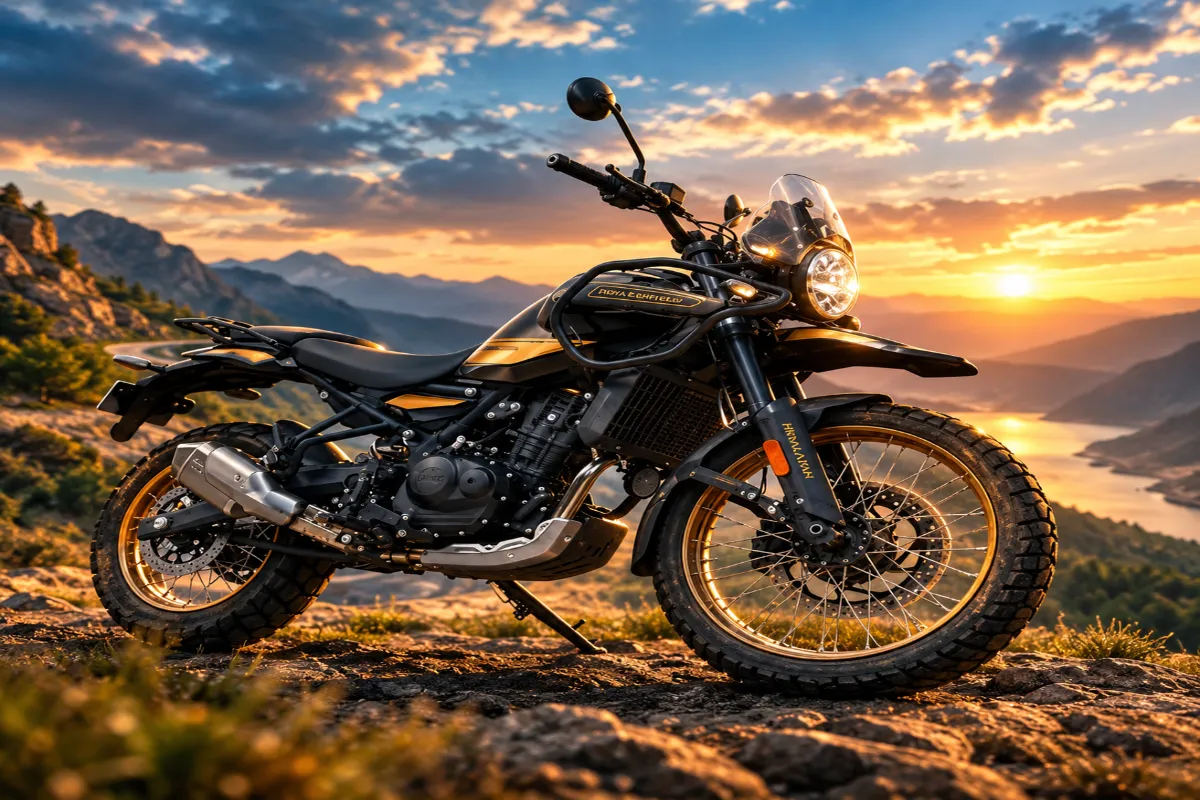
The Royal Enfield Classic 350 remains the reference point. It uses a 349 cc air/oil-cooled single making about 20.2 bhp and 27 Nm. That is a relaxed, torquey character, not a performance one. Per Autocar India, the base Redditch variant has single-channel ABS, while the others get dual-channel ABS, a detail worth checking before you buy because it affects braking in the wet. Prices have shifted since the GST cut: in September 2025, Autocar reported the Classic 350 falling from ₹1.97–2.35 lakh to ₹1.67–2.00 lakh in Chennai, while its current spec page lists ex-showroom prices of ₹1.87 to ₹2.23 lakh. Both can be accurate, because they reflect different dates and cities, which is exactly why you should ask for a current quote.
The weekend tourer and adventure rider
This is where specifications start to differ in ways you can feel. Autocar India’s recent adventure-tourer comparison gives a useful range of numbers:
| Motorcycle | Price (ex-showroom, Delhi) | Power | Seat height | Kerb weight |
|---|---|---|---|---|
| TVS Apache RTX 300 | ₹1.99 to ₹2.39 lakh | 36 hp | 835 mm | 180 kg |
| Yezdi Adventure | ₹2.06 to ₹2.13 lakh | 29.6 hp | 815 mm | about 198 kg |
| Royal Enfield Himalayan 440 | ₹2.29 lakh | 25.4 hp | 800 mm | 199 kg |
| KTM 250 Adventure | ₹2.53 lakh | 31 hp | 825 mm | 176 kg |
| Royal Enfield Himalayan 450 | ₹3.08 to ₹3.39 lakh | 40 hp | 825 to 845 mm | 196 kg |
| Kawasaki Versys-X 300 | ₹3.49 lakh | 39 hp | 815 mm | 175 kg |
| KTM 390 Adventure X | ₹3.50 lakh | 46 hp | 825 mm | 181 kg |
| BMW F 450 GS | ₹4.95 to ₹5.60 lakh | 48 hp | 845 mm | 178 kg |
Source figures vary slightly across listings; the KTM 390 Adventure range, for example, is quoted at different starting prices on the same site. The table is for comparison, not for budgeting.
Two things stand out. First, power and weight do not move together: the 176 kg KTM 250 Adventure is lighter than the 196 kg Himalayan 450 despite being smaller, and that difference shows up when you manoeuvre at low speed. Second, the Himalayan 450 can be dropped to 805 mm with a low-seat accessory, which opens it up to riders who would otherwise skip a bike that tall.
The shorter rider
Seat height is the number that decides whether you ride confidently. From the table, the Himalayan 440 (800 mm), the Yezdi Adventure and the Versys-X 300 (both 815 mm) sit lowest. But seat height alone is misleading. A narrow seat lets your legs drop straight down, so two bikes with the same height can feel very different. A heavier bike also punishes a short rider more, because you cannot recover a lean with your legs. Sit on the bike, lift it off its side stand and walk it backwards before you commit.
The taller rider
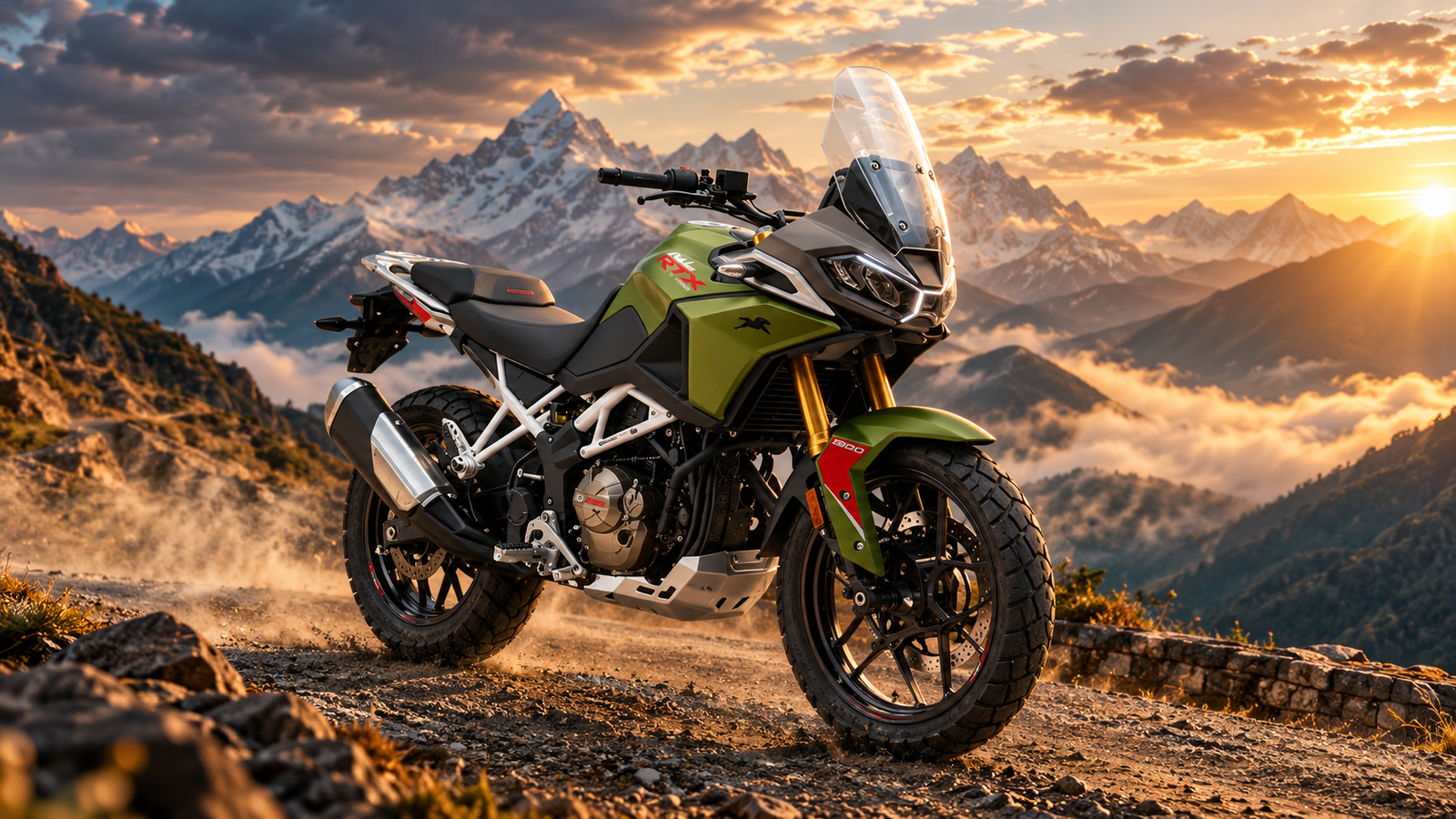
Taller riders have the opposite problem: cramped knees and a low handlebar position on small commuters. Larger adventure bikes such as the BMW F 450 GS (845 mm) and the high setting of the Himalayan 450 give more room, and a taller windscreen helps on highways.
The rider who carries a pillion
If you regularly ride two-up, check the pillion seat length, grab rails, rear suspension preload adjustment and the bike’s real load-carrying ability. A bike that feels lively solo can feel flustered with 160 kg on board. A longer wheelbase and a torquey engine make two-up riding calmer.
New Cars to Watch in 2026: 7 Launches That Matter in India
A Practical Guide on How to Choose a Motorcycle Without Regret
Once you have narrowed down your category, these checks separate a good purchase from an expensive mistake.
Engine size is a blunt tool
Displacement is a poor shortcut. A 350 cc cruiser tuned for low-end torque feels slower than a 250 cc sport bike, and a 125 cc commuter can be more relaxed on a city street than either. Ask instead about power and torque, where in the rev range they arrive, and how the bike feels at the speed you ride most often. The Apache RTX 300, for instance, makes about 36 hp from a 299 cc liquid-cooled single and weighs 180 kg, which is a very different proposition from a 20 bhp, air-cooled cruiser.
Weight and seat height matter more than you expect
Kerb weight includes fuel and fluids, and you feel it most when the bike is stationary: parking, reversing out of a bay, a stop on a slope. A 15 to 20 kg difference sounds small on paper and is obvious when you try to move it sideways.
Check the brakes and electronics
ABS is the single biggest safety feature on a motorcycle. India currently requires it on motorcycles above 125 cc; smaller bikes use a combined braking system. In June 2025, the government announced plans to extend ABS to all new two-wheelers from January 2026, along with two BIS-certified helmets with every new bike. By November 2025, though, reports said the deadline might be pushed back and that the rule had not been formally notified. I could not confirm the final status when writing this, so check what the bike you want actually has. If you have a choice, prefer dual-channel ABS over single-channel.
Account for GST, which has changed the price map
Autocar India reported that GST on motorcycles up to 350 cc was cut from 28 percent to 18 percent in September 2025, lowering ex-showroom prices by about 10 percent. Bikes above 350 cc moved the other way and became costlier, though the source I read did not state the new rate. In practice, this makes 350 cc and below a more attractive band for first-time buyers, and it explains why so many popular bikes sit at 349 cc or just under.
Think about total ownership cost
The purchase price is the beginning. Add insurance, registration, a decent helmet and riding gear, tyres, service intervals and fuel. Premium adventure and sport bikes cost more to service and their tyres are more expensive. A bike with a wide service network will save you time as well as money, especially if you live outside a metro.
Ride before you buy
Test rides are not a formality. Pay attention to ergonomics, clutch weight, how the engine feels in traffic, vibration at your usual cruising speed and whether the mirrors show something useful. Ask to ride more than one bike from the same segment on the same day, because comparisons expose differences that a single ride hides.
Common Mistakes When Choosing a Motorcycle
- Buying for the best day, not the average day. A track-oriented bike is a poor commuter.
- Ignoring seat height until delivery day. A bike you cannot flat-foot is a confidence problem.
- Choosing on top speed. You will rarely use it; you will use low-speed manoeuvrability every day.
- Skipping gear. A good helmet, jacket and gloves should be part of the budget, not an afterthought.
- Trusting a single price source. As the Classic 350 example shows, the same bike can be listed at different prices depending on date, city and variant.
- Assuming newer means better. Facelifts and new launches are frequent, and a proven model with a good service record can be the smarter choice.
Which Bike for Which Rider? A Quick Summary
| Rider type | What matters most | Example direction |
|---|---|---|
| Daily commuter | Light weight, low running cost, service network | 100 to 125 cc commuters such as the Splendor+ |
| New rider | Low seat, manageable weight, forgiving power | Lighter 250 to 350 cc bikes; test several |
| Cruiser or retro fan | Torque, comfort, character | Royal Enfield Classic 350 |
| Adventure and touring | Range, suspension, ergonomics, weight | RTX 300, Himalayan 450, KTM 250 or 390 Adventure |
| Shorter rider | Seat height, narrow seat, lower weight | Himalayan 440, Yezdi Adventure, Versys-X 300 |
| Taller rider | Leg room, screen height | BMW F 450 GS, Himalayan 450 on its high seat |
Conclusion
Learning how to choose a motorcycle comes down to honesty about your riding and your body, and patience with the test ride. Match the bike to the daily route, check that your feet reach the ground, choose the safest braking setup you can afford, and budget for ownership instead of only the price tag. The right motorcycle is rarely the fastest or the most talked about; it is the one you will want to ride on an ordinary Tuesday.
Frequently Asked Questions
What is the best motorcycle for a beginner in India? There is no single best bike, but look for a seat height you can flat-foot, a kerb weight you can handle and smooth, modest power. Among the adventure bikes in Autocar India’s comparison, the KTM 250 Adventure (176 kg) and Versys-X 300 (175 kg) are among the lightest, while the Himalayan 440 has the lowest seat at 800 mm. These are my inferences from specifications, so test-ride them.
Is a 350 cc bike a good first motorcycle? It can be. Bikes up to 350 cc benefit from the lower 18 percent GST, and the Classic 350 makes about 20.2 bhp, which is manageable. Its weight and size can still be a lot for a very short or very new rider, so sit on it first.
Is ABS compulsory on every new motorcycle in India? ABS is currently required above 125 cc. A proposal announced in June 2025 would extend it to all new two-wheelers from January 2026, but a November 2025 report said the deadline might be delayed and the rule had not been formally notified. Confirm the status with the dealer.
How important is seat height? Very. It decides whether you can plant your feet at stops and whether you can control the bike at low speed. Compare seat height with your inseam and ride the bike, because seat width and shape affect how it feels.
Should I buy a new launch or a proven model? New launches can offer better features, but a model with a longer track record usually has a clearer service and reliability history. Decide based on how you ride, not novelty.
One Response